
Last updated September 22, 2026
Free on-site gate assessment - hinges, posts, and your LiftMaster or Nice gate operator checked before anything is quoted
The assessment is free and the quote is the invoice.
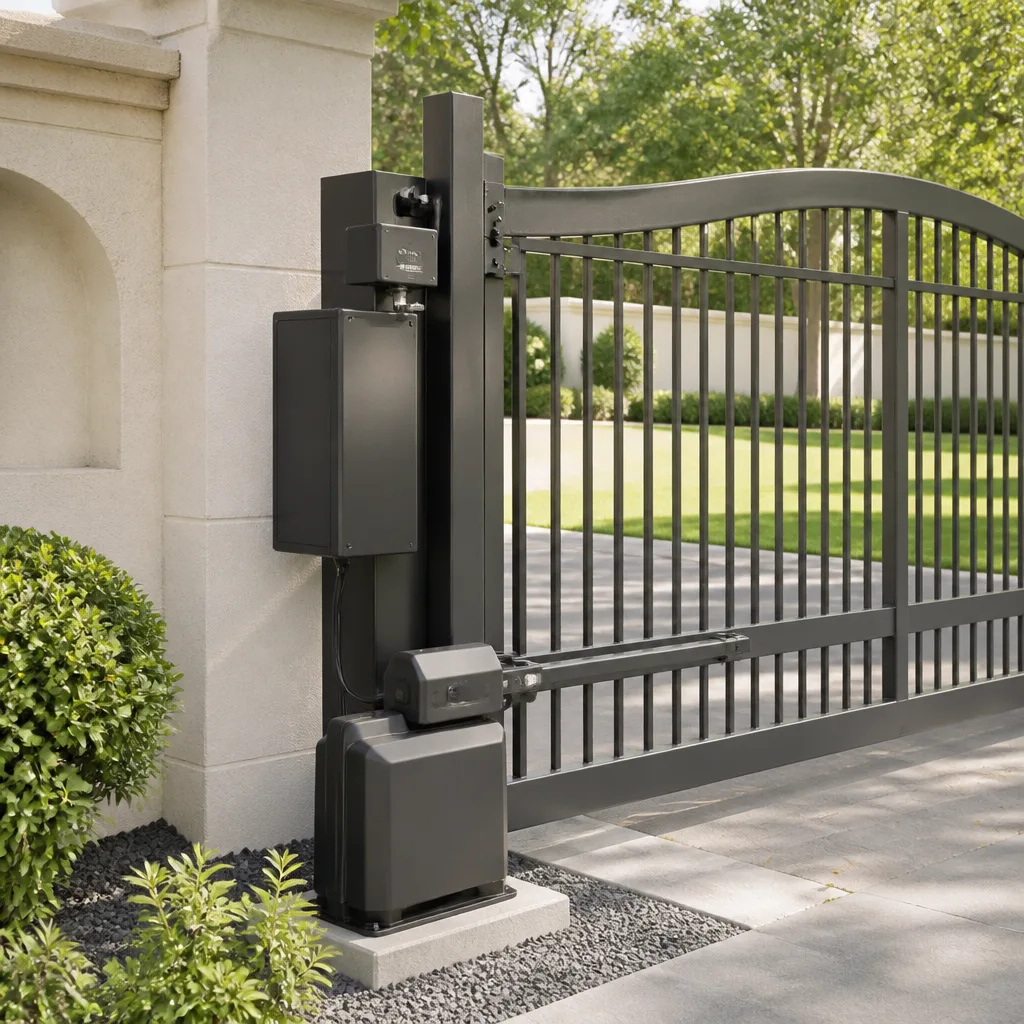
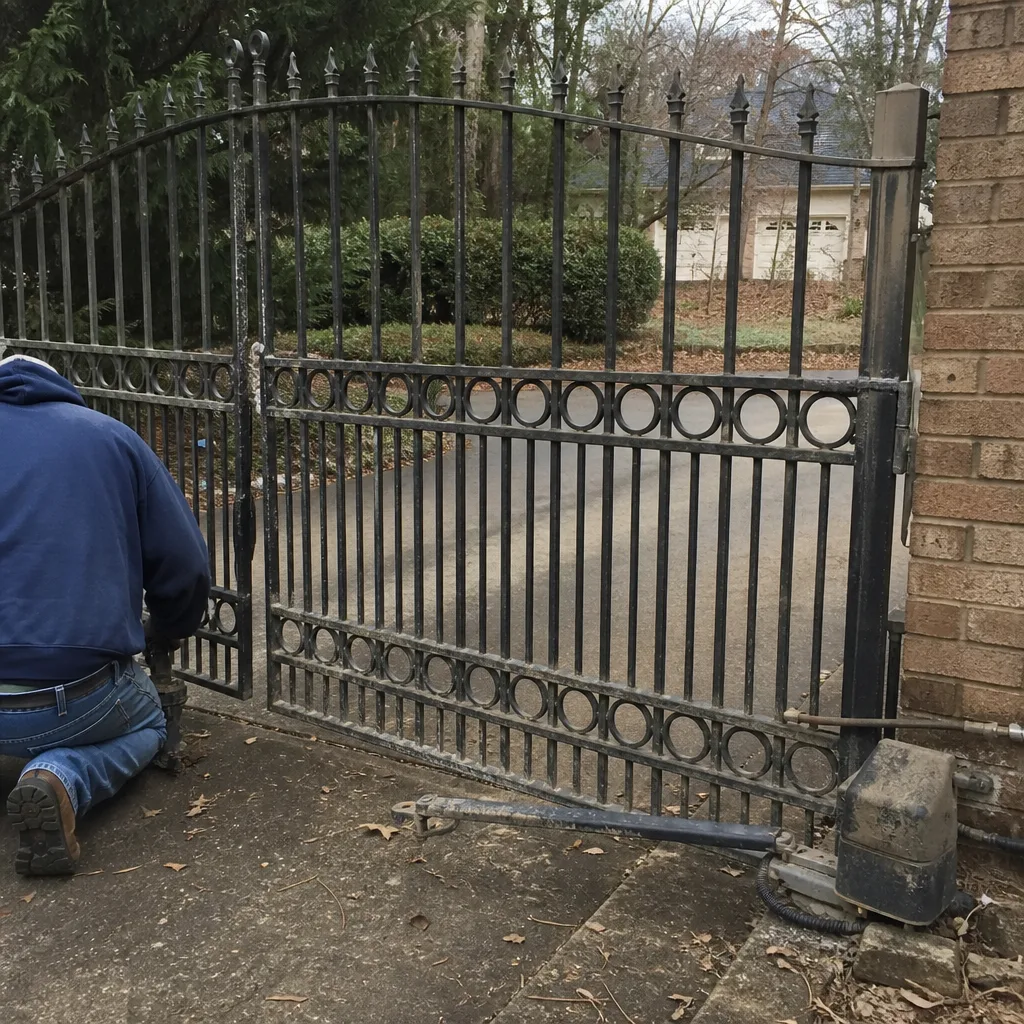 Before
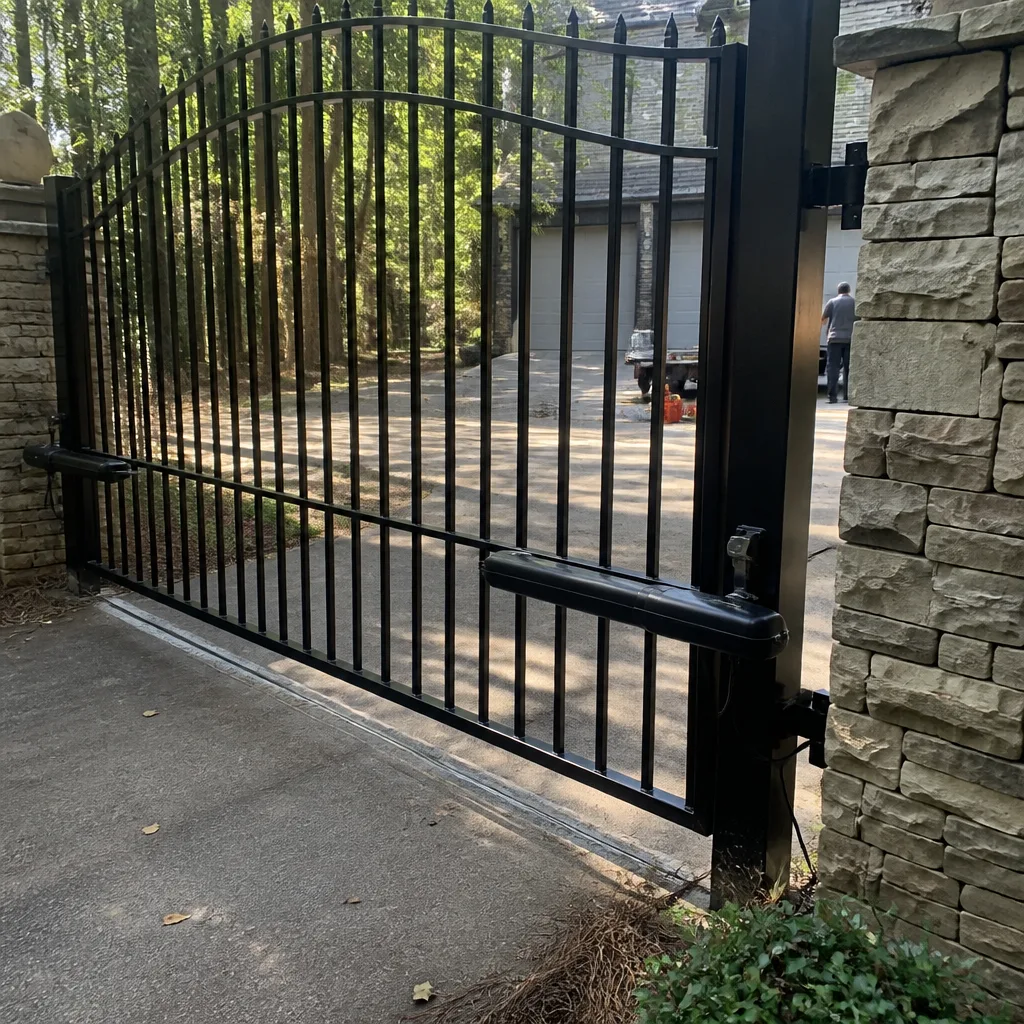 After
After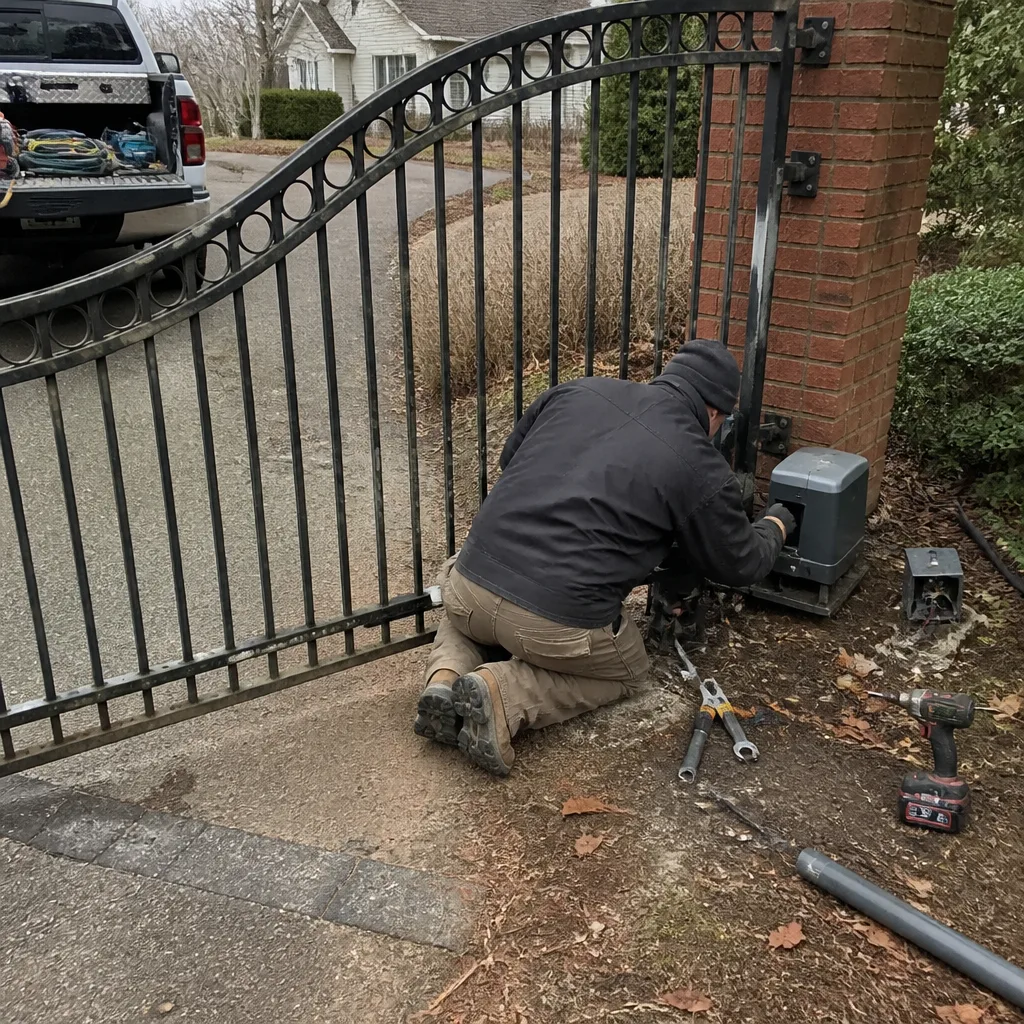 Before
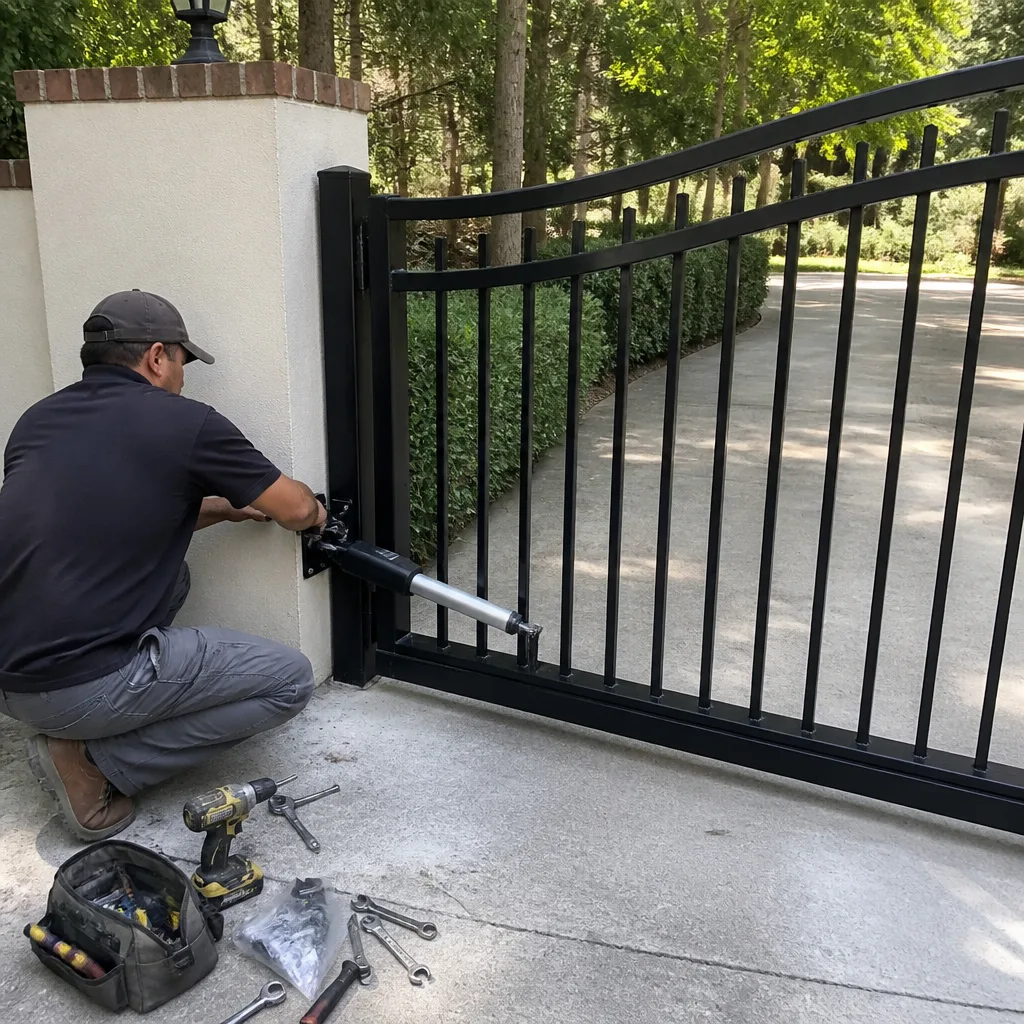 After
After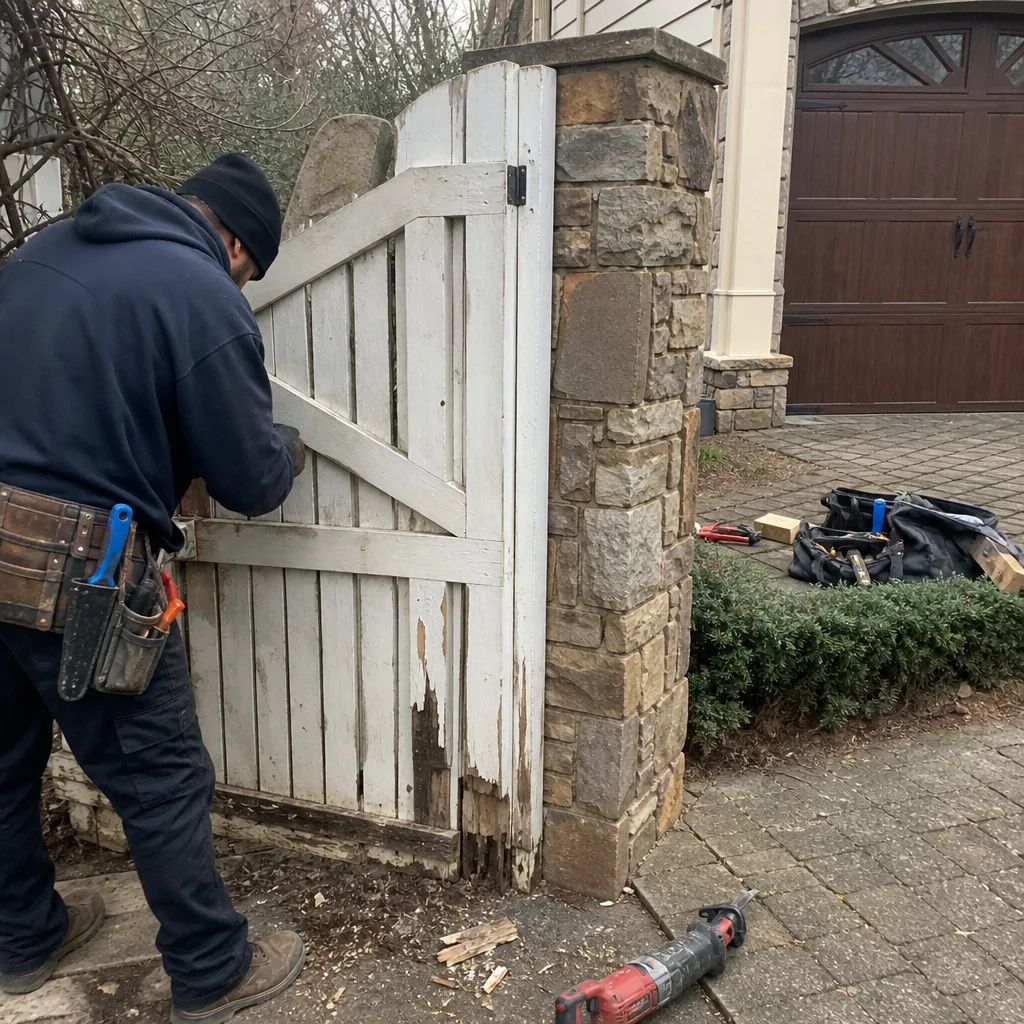 Before
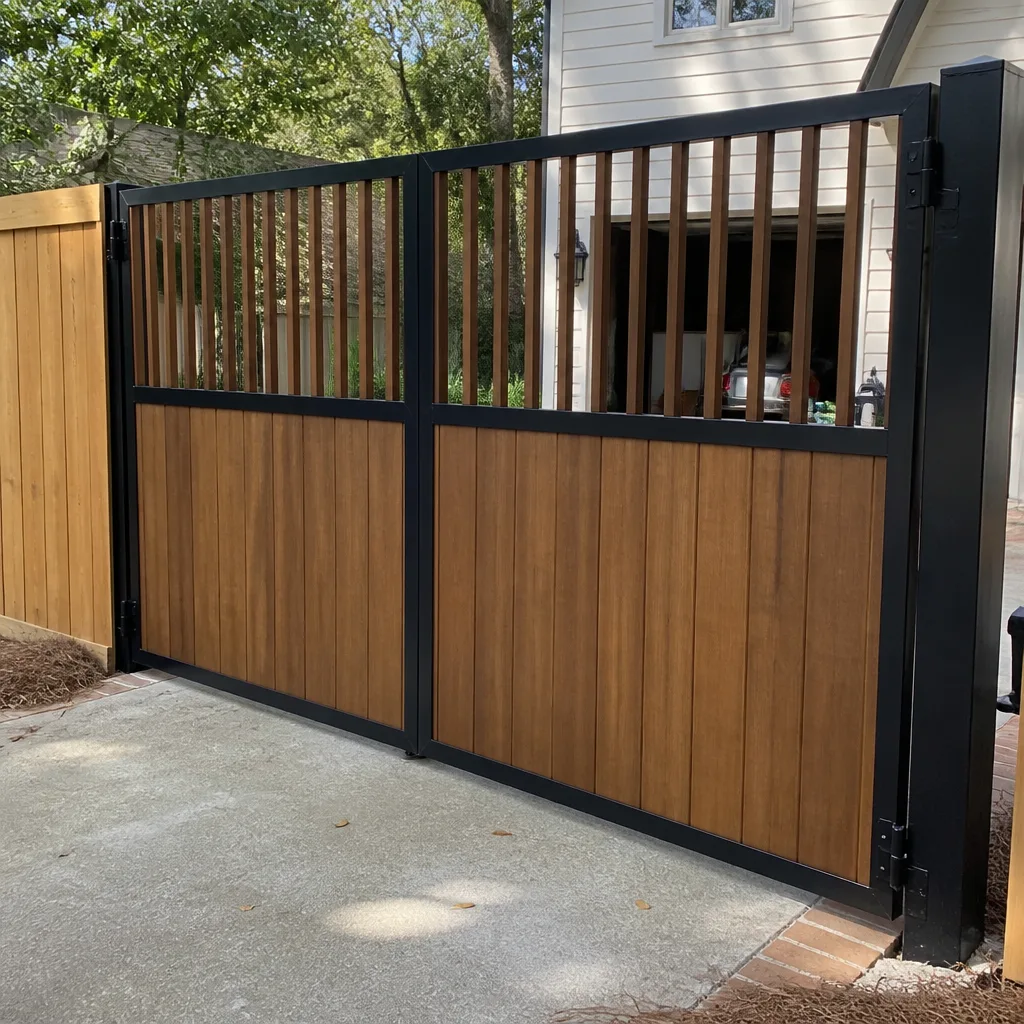 After
AfterGate Repair Warning Signs: A Alpharetta Homeowner’s Reference Guide
The warning sign Alpharetta homeowners ignore most often isn’t dramatic. It’s a gate that takes two remote button presses to open instead of one. That intermittent response, especially common after the humid Georgia summers we get in Alpharetta, is the single most reliable early indicator of a control board or receiver failure that’s roughly sixty days from becoming a gate stuck closed. In this guide, we’ll sort every warning sign by the actual risk it represents, not by how alarming it sounds, so you know what’s same-day urgent, what can be scheduled, and what’s simply worth watching.
Quick Answer
Gate repair warning signs in Alpharetta fall into three urgency tiers: same-day safety issues (unexpected reversal, exposed wiring, sagging gate dragging on the ground), schedule-within-two-weeks mechanical issues (slow operation, grinding sounds, intermittent remote response), and monitor-and-log observations (surface rust, minor paint flaking, slight remote delay). The most commonly missed early warning is intermittent remote response, which typically indicates receiver or control board degradation rather than a dead remote battery.
Table of Contents
- The Three-Tier Urgency Classification
- What Intermittent Response Actually Means
- Reading Visual Signs: Structural vs. Cosmetic
- The Sound Map: What Each Noise Indicates
- How to Document a Warning Sign for Accurate Estimates
- Alpharetta-Specific Factors That Accelerate Gate Wear
- Common Mistakes to Avoid
- When to Call a Professional
- Frequently Asked Questions
- The Bottom Line
 Before
 After
AfterThe Three-Tier Urgency Classification
Not every warning sign demands the same timeline. We’ve sorted thousands of Alpharetta service calls since 2014, and the pattern is consistent: homeowners who understand urgency tiers make better decisions and spend less on reactive repairs.
Tier 1: Same-Day Safety Issues
These conditions create immediate risk of injury, property damage, or security breach. Call for same-day service. Do not operate the gate.
- Unexpected reversal: The gate begins to close, then reverses without obstruction. This indicates a safety sensor failure or limit switch misalignment. A gate that can’t distinguish between a child and empty air is a gate that can strike a person.
- Exposed wiring: Any wire sheath compromised by UV damage, rodent chewing, or landscape equipment. Alpharetta’s clay-heavy soil and seasonal moisture make underground wire faults particularly hazardous.
- Gate dragging on ground: The gate leaf or slide has dropped enough to contact the driveway surface. This stresses the motor beyond design load and can cause sudden collapse of the support post.
- Broken weld at hinge or bracket: A visible crack or separation in any load-bearing weld. We’ve seen this in older Alpharetta subdivisions like Windward and Country Club of the South where original builder-grade gates are reaching fifteen to twenty years of service.
- Motor running without gate movement: The operator hums but the gate doesn’t respond. This typically means a stripped internal gear or broken drive belt, and continued operation will destroy the motor.
Tier 2: Schedule Within Two Weeks
These issues degrade performance and will worsen, but they don’t present immediate safety risk if the gate is used with caution.
- Slow operation: A swing gate that previously opened in twelve seconds now takes twenty. A slide gate that ran at six inches per second now crawls at three. This points to motor capacitor decline, track debris accumulation, or increasing mechanical resistance.
- Grinding or scraping sounds: Metal-on-metal contact somewhere in the drive system. The location of the sound matters, which we’ll cover in the sound map section below.
- Intermittent remote response: The signature early warning. We’ll examine this in detail in the next section.
- Visible rust on hardware: Surface rust on bolts, chains, or brackets that hasn’t yet compromised structural integrity.
- Gate stopping short of full open or close: The limit switches need recalibration, or the gate is encountering increasing mechanical resistance.
Tier 3: Monitor and Log
These observations are worth tracking but don’t yet require technician intervention.
- Minor paint or powder-coat flaking: Cosmetic degradation that should be addressed before substrate exposure, but not urgent.
- Slight remote delay: A consistent one to two second lag, not intermittent failure. Often indicates declining signal strength that may stabilize for months.
- Weatherstrip deterioration: The rubber seal between gate panels or at post contact points is cracking. This affects noise and weather sealing, not safety.
- LED indicator dimming: On operators with status lights, a dimmer-than-normal display often precedes power supply issues by six to twelve months.
We recommend a simple log: date, observation, and whether the condition is stable, worsening, or intermittent. When you do call gate repair in Alpharetta, this log lets us give you a more precise estimate and often lets us bring the correct parts on the first visit.
What Intermittent Response Actually Means
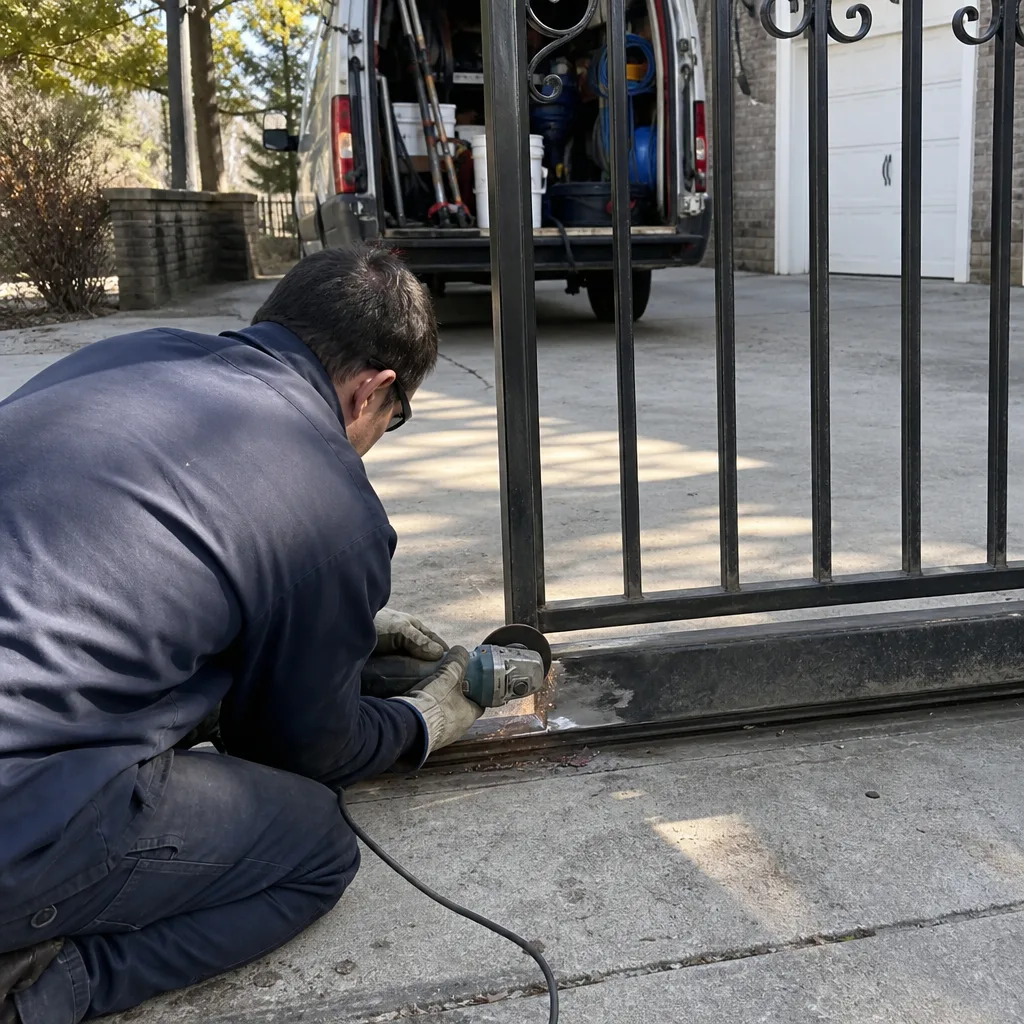
The two-press open. The “worked fine yesterday” remote. The gate that responds at 8 AM but not at 6 PM. In our experience across Alpharetta, this is the most misdiagnosed warning sign in residential gate service.
Homeowners almost always replace the remote battery first. That’s reasonable, but it’s almost never the fix. Here’s what intermittent response actually indicates, ranked by frequency:
- Failing receiver board: The receiver, typically housed in the operator cabinet, is losing sensitivity. Heat accelerates this, and Alpharetta’s July and August temperatures, often pushing into the mid-90s with high humidity, stress these components heavily. The receiver works when cool, fails when hot. That’s why the morning open succeeds and the evening return doesn’t.
- Control board logic degradation: The main circuit board is developing cold solder joints or capacitor failure. Intermittent operation is the hallmark symptom before total failure.
- Antenna or coaxial connection fault: The receiver antenna, usually a short wire extending from the operator, has a compromised connection. Vibration from gate operation slowly loosens the connector.
- Interference from new RF sources: A neighbor’s new garage door opener, security system, or even LED lighting can occupy the same frequency band. This is more common in dense Alpharetta neighborhoods like downtown Alpharetta or Avalon-adjacent developments where lot sizes are smaller.
Actual remote failure is fifth on this list. Remote buttons do wear, and we’ve replaced plenty, but a remote that works sometimes and fails other times is almost always signaling a receiver or board issue, not a power issue.
The diagnostic test we recommend: use the keypad or indoor button if available. If those work consistently when the remote fails, you’ve isolated the problem to the remote or receiver, not the operator. If all control methods fail intermittently, the issue is in the operator cabinet.
Under Vance Gate Repair Alpharetta home service protocols, we test receiver sensitivity with a field strength meter, photograph the antenna routing, and document the frequency environment. That documentation goes into your job record, so if interference develops later, we have baseline data.
Reading Visual Signs: Structural vs. Cosmetic
Alpharetta’s freeze-thaw cycles are milder than northern climates, but our clay soils expand and contract significantly with moisture changes. That soil movement stresses gate posts and foundations in ways that show up visually if you know what separates structural concern from surface aging.
Structural Warning Signs
These require prompt evaluation. The gate’s physical integrity is compromised.
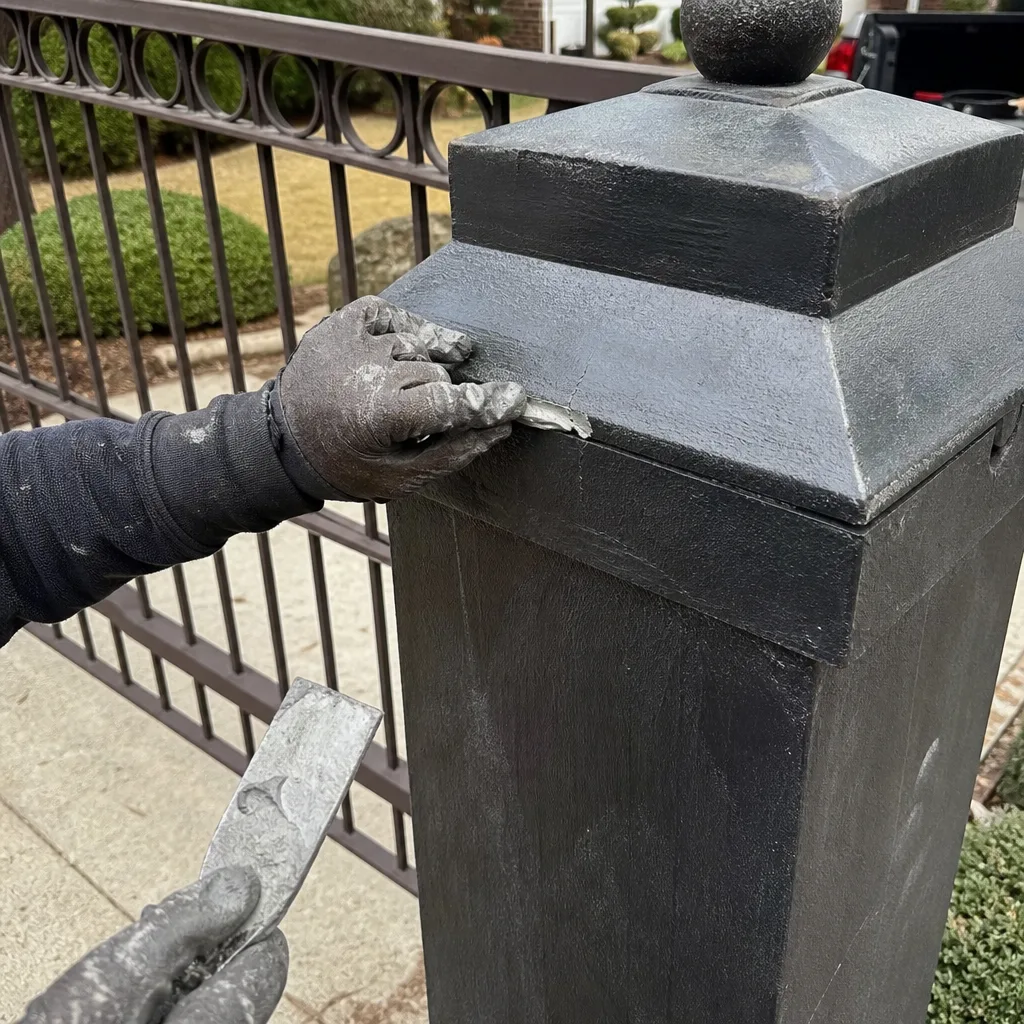
- Post lean exceeding 2 degrees: Use a smartphone level app against the post face. A lean of more than two degrees from vertical indicates footing failure or soil subsidence. We’ve replaced posts in Alpharetta’s Windward community where improper concrete depth during original construction led to gradual lean over five to seven years.
- Crack propagation in welds: A hairline crack that extends with each season. Mark the crack tip with a permanent marker and check monthly. If it grows, the weld is cycling under load and will fail.
- Hinge pin elongation or ovalling: The pin hole in the bracket becomes elongated, allowing the gate to sag and bind. This accelerates motor wear and can cause the gate to jump the track on slide systems.
- Concrete footing cracks with displacement: A crack is less concerning than a crack where one side has shifted relative to the other. That indicates active soil movement.
- Gate frame twist visible in daylight: Stand at the gate corner and sight along the top rail. Any twist or bow indicates frame degradation, often from corrosion inside the tube that isn’t visible externally.
Cosmetic Wear
These affect appearance and long-term protection but don’t threaten immediate function.
- Surface rust without pitting: Red discoloration that wipes away to smooth metal. Address with cleaning and touch-up coating before pitting develops.
- Minor powder-coat chalking: The surface becomes slightly dull or powdery when rubbed. This is UV degradation of the coating surface, not substrate failure.
- Hardware discoloration: Bolts and nuts showing surface oxidation but turning freely and maintaining torque.
- Minor seal or gasket compression: Rubber components taking a set but still maintaining contact.
The critical distinction: structural signs involve dimensional change, movement under load, or crack growth. Cosmetic signs are static surface conditions. When in doubt, photograph the area and measure any gap, lean, or crack width. Those numbers let us give you accurate guidance over the phone.
The Sound Map: What Each Noise Indicates
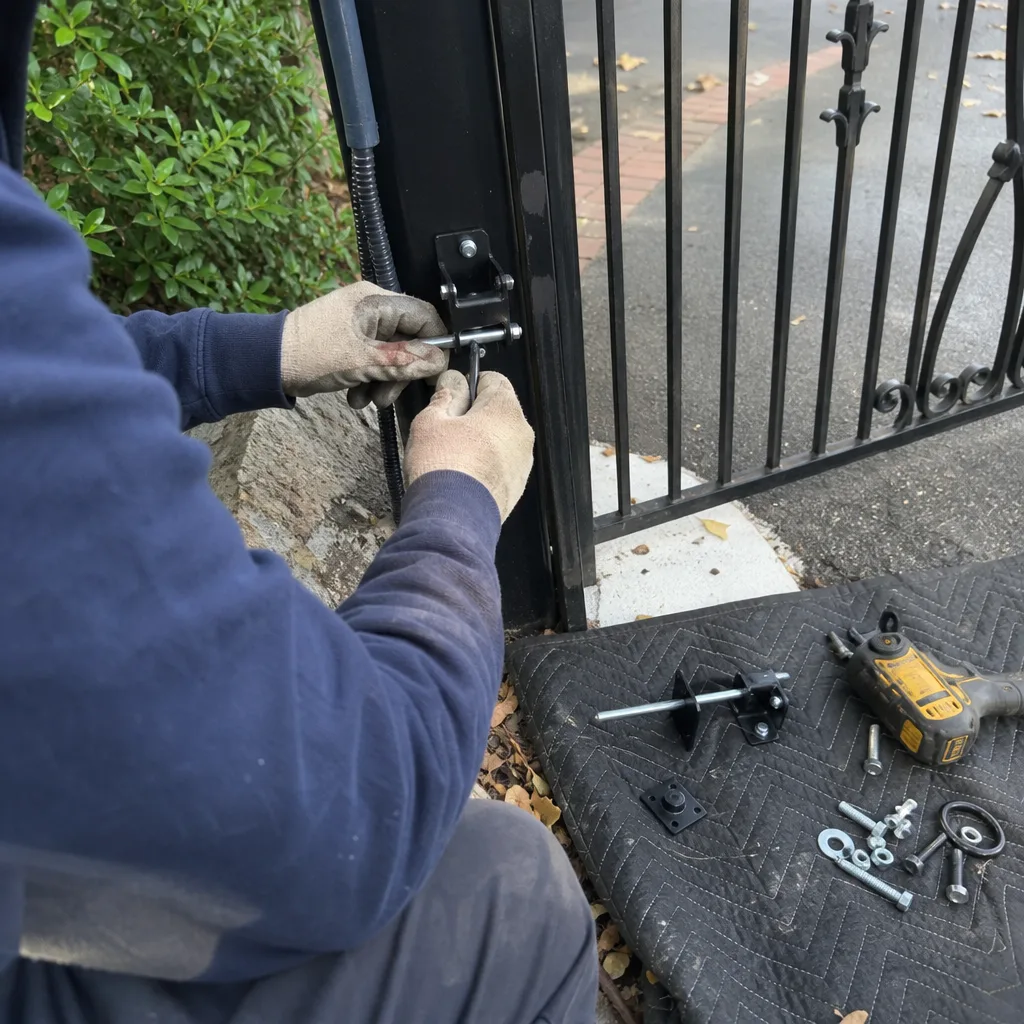
Gates are mechanical systems with moving parts, and they announce their condition acoustically. The same sound from different locations means different things. Here’s the mapping we’ve developed from thousands of Alpharetta diagnostic visits.
Grinding
Grinding is metal-on-metal contact under load. Location determines cause:
- Slide gate, full length of travel: Track debris, worn track liner, or wheel bearing failure. Alpharetta’s pollen seasons coat tracks with a sticky film that attracts grit. Annual track cleaning prevents most grinding.
- Swing gate, at hinge side: Hinge pin binding due to corrosion or inadequate lubrication. The hinge is carrying lateral load it wasn’t designed for.
- Operator cabinet: Internal gear wear. On chain-drive operators, this often means a dry or stretched chain. On screw-drive units, the drive nut is degrading. On Elite and DoorKing operators we service, this sound specifically indicates the nylon drive gear is shedding teeth.
Clicking
Clicking is electrical or solenoid actuation without mechanical follow-through:
- Single click, no motor response: The control board is receiving the command but the motor isn’t starting. Check the disconnect switch, often a key switch or pull cord that has been inadvertently activated.
- Rapid clicking during operation: The motor is encountering excessive load and the overload protector is cycling. Stop operation immediately. This protects the motor but indicates a mechanical bind.
- Clicking from the lock mechanism: Electric strike or magnetic lock failing to fully engage. On Ghost Controls systems with integrated locking, this often precedes lock solenoid failure by two to four weeks.
Motor Hum Without Movement
The operator is energized but mechanical power isn’t reaching the gate. This is always Tier 1 urgent:
- Hum from operator, gate stationary: Broken drive belt, stripped gear, or detached chain. Continued operation will burn the motor.
- Hum from operator, gate attempts to move: Mechanical bind exceeding motor torque. Could be track obstruction, seized bearing, or physical gate damage.
Squealing or Whining
High-frequency mechanical noise:
- During acceleration or deceleration: Worn motor bearings or failing capacitor. The capacitor provides starting torque; when it degrades, the motor strains audibly.
- Continuous during operation: Brake drag or clutch slip. On Mighty Mule swing operators, this specifically indicates the clutch adjustment needs reset.
Thumping or Banging
Impact or loose component noise:
- At end of travel: Failed or degraded limit switch causing the gate to hit the physical stop. Adjust limits immediately or disable automatic operation.
- Mid-travel, rhythmic: Loose chain or belt slapping. Tension adjustment needed.
- Random, irregular: Loose hardware in the gate frame or mounting. Inspect all bolts and fasteners.
We document every sound observation with a decibel reading and frequency note when possible. That baseline lets us verify improvement after repair.
How to Document a Warning Sign for Accurate Estimates
The Haven Standard requires that we document what we find, but you can help us document before we arrive. A well-documented warning sign often lets us quote by phone and arrive with correct parts, saving a return trip.
- Shoot a 15-second video: Start with the full gate in frame, then move closer to the area of concern. For sounds, record audio from three feet and twelve feet. The distance change helps us locate the source.
- Measure and record: Gap width with a tape measure. Post lean with a level app. Crack length with a ruler in frame for scale. Write down the numbers.
- Note operating conditions: Time of day, temperature, recent weather. Does the problem occur first operation of the morning? After rain? Only in direct sun? These patterns are diagnostic.
- List control methods tested: Remote, keypad, indoor button, vehicle homelink. Which work, which fail, which are intermittent.
- Photograph the operator data plate: The manufacturer label with model, serial, and date code. This is usually inside the cabinet or on the motor housing. It tells us exactly what parts and documentation to bring.
Email this package to us or have it ready when you call. Under Clause 1 of the Haven Standard, we’ll review it and give you a written price range before scheduling. No “call for a quote,” no surprise invoice.
For gate installation in Alpharetta consultations, the same documentation habit applies. We photograph the existing site, measure approach grades and clearances, and provide a written scope and price before any work is authorized.
Alpharetta-Specific Factors That Accelerate Gate Wear
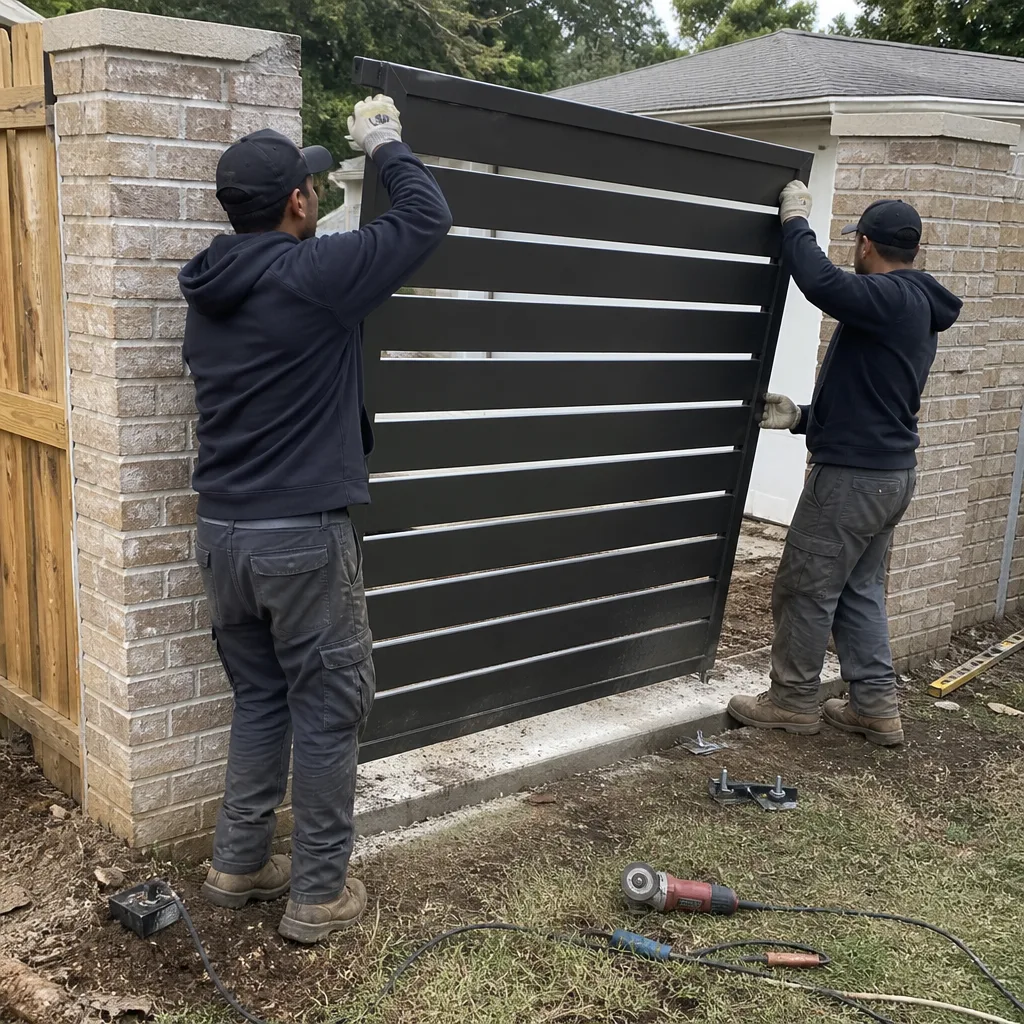
Georgia’s climate and Alpharetta’s development patterns create specific stress on gate systems that homeowners in other markets don’t face.
Humidity and condensation: Alpharetta’s average relative humidity exceeds 70% for seven months of the year. Operator cabinets that aren’t properly sealed develop internal condensation that corrodes control boards. We see this most in shaded installations where cabinets never fully dry after morning dew.
Clay soil expansion: The Georgia red clay common in Alpharetta expands significantly when wet and shrinks during dry spells. Post footings move with this cycle, and gates installed without adequate depth or drainage gradually lean or bind. In the Crabapple and Milton areas west of downtown, we’ve documented post movement of up to half an inch seasonally.
Pollen accumulation: March through April produces heavy pine and oak pollen that coats track systems. The pollen itself is benign, but it traps grit and forms an abrasive paste. Gates that operated silently in February grind by May without cleaning.
Lightning exposure: Alpharetta averages 50 thunderstorm days annually. Power surges destroy control boards and receivers, often without visible damage. We recommend surge protection on all operators, and we install it on every replacement we perform.
HOA maintenance standards: Many Alpharetta subdivisions, particularly in newer developments like Avalon and Halcyon-adjacent communities, have aesthetic standards that require prompt repair of visible gate damage. A delay that wouldn’t affect function can generate violation notices.
These factors don’t change the warning sign categories, but they explain why a gate in Alpharetta may degrade faster than an identical installation in a drier or more stable soil climate. They also inform our preventive maintenance recommendations.
Common Mistakes to Avoid
- Assuming the remote is the problem: As detailed above, intermittent response almost never indicates remote failure. Replacing the remote without testing the receiver wastes money and delays proper repair.
- Ignoring slow operation as “just getting old”: Gates don’t slow with age; they slow with increasing mechanical resistance or declining motor performance. Both are repairable conditions that will cascade into more expensive failure if deferred.
- Lubricating with WD-40 on all moving parts: WD-40 is a solvent and light penetrant, not a lubricant. On gate hinges and chains, it attracts dust and forms grinding paste. Use a lithium-based grease or the manufacturer-specified lubricant.
- Operating a dragging gate: Every cycle with the gate dragging on the ground overworks the motor and risks post or footing failure. Disconnect the operator and use manual release until repaired.
- DIY electrical troubleshooting on 120V operator circuits: Operator cabinets contain line-voltage wiring. Beyond checking the disconnect and breaker, electrical diagnosis requires training and proper lockout procedures. The documented photo record we leave includes wiring condition for your safety and future reference.
- Waiting for total failure to call: A gate that stops working entirely typically has secondary damage from the final failure event. Addressing Tier 2 signs early prevents Tier 1 emergencies.
- Neglecting to check the manual release: Every automatic gate should have a functional manual release for power outages or emergencies. If you can’t operate your gate manually, that’s itself a warning sign.
When to Call a Professional
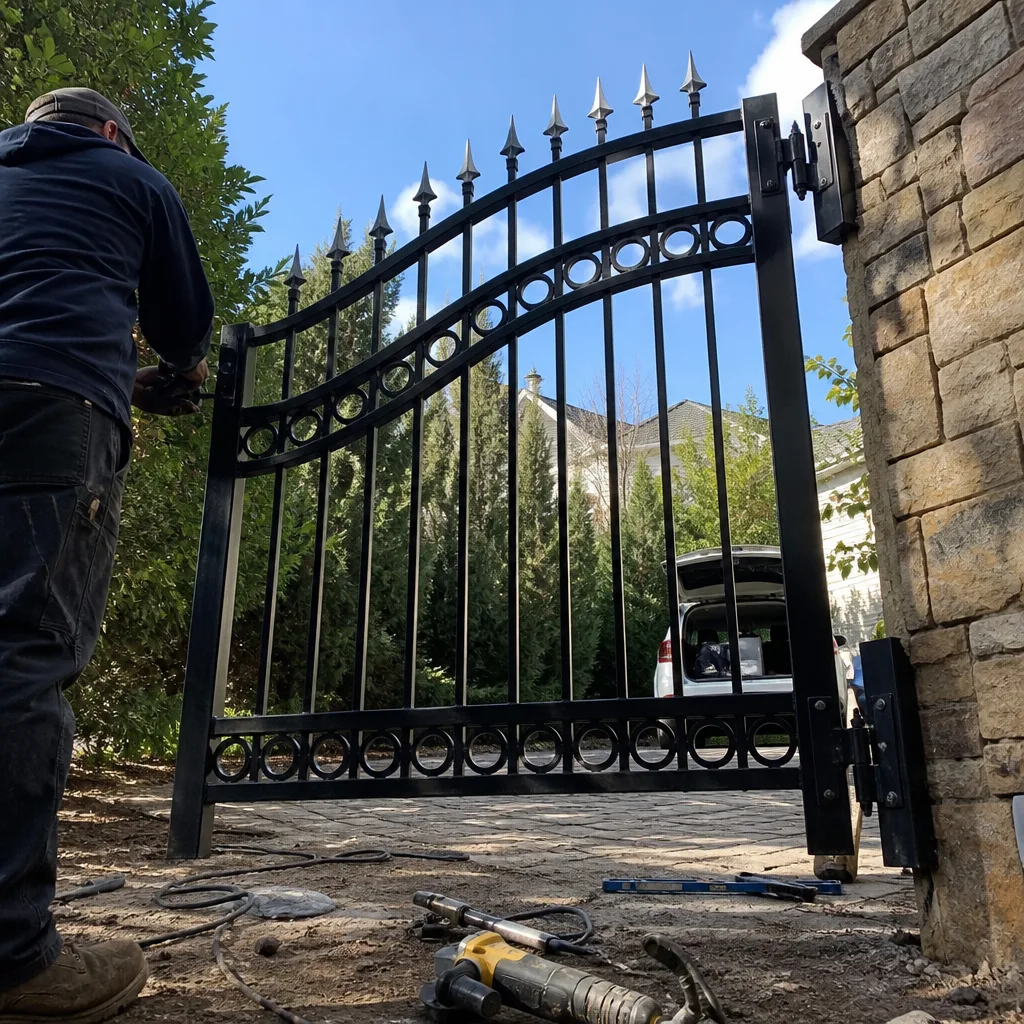
Call same-day for any Tier 1 condition: unexpected reversal, exposed wiring, dragging gate, broken weld, or motor running without movement. These present immediate safety or security risk.
For Tier 2 conditions, schedule within two weeks. The gate is functional but degrading, and early intervention prevents the cascade failure that converts a $280 adjustment into a $1,400 operator replacement.
Even Tier 3 observations benefit from professional documentation. We log baseline conditions at no charge during any service visit, building a history that helps us distinguish normal aging from accelerated wear.
Vance Gate Repair Alpharetta offers free estimates in Alpharetta. A live person answers at (678) 679-2152, any hour. We’ll review your documentation, give you a written price before any work starts under Haven Standard Clause 1, and leave a photographed record of everything we find and everything we do.
Frequently Asked Questions
Most residential gate repairs in Alpharetta range from $180 for limit switch adjustment or safety sensor realignment to $650 for control board replacement, with swing gate motor replacement typically running $850 to $1,400 depending on brand and whether the arm bracket is intact. We provide a written price before any work starts, and our free second opinion service lets you compare any written estimate from another company at no cost. Call (678) 679-2152 for an exact quote on your specific condition.
Same-day service is available for Tier 1 safety issues, including unexpected reversal, exposed wiring, or motor running without gate movement. For Tier 2 mechanical issues, we typically schedule within 24 to 48 hours. Installation and scheduled replacement work is measured, ordered, and booked, not dispatched for same-day completion. A live person answers (678) 679-2152 at any hour to assess urgency and schedule appropriately.
A gate that opens but won’t close almost always indicates a safety sensor or obstruction detection issue, not a motor problem. The closing cycle has stricter safety requirements than opening. Check for visible debris on the track, misaligned photo-eyes (the infrared beam sensors), or spider webs blocking the eye lenses. If the gate reverses immediately on closing command, the photo-eyes are likely misaligned or the receiver isn’t seeing the transmitter. If it starts to close then reverses, it may be detecting resistance from mechanical binding. Document the behavior and call for diagnosis if basic cleaning doesn’t resolve it.
A properly maintained residential gate operator in Alpharetta typically lasts 12 to 18 years, though we’ve serviced Elite and DoorKing units in the Windward and Country Club of the South areas that exceeded 20 years with preventive maintenance. Humidity and lightning exposure are the primary local accelerators of wear. Annual track cleaning, hinge lubrication, and surge protection installation extend service life significantly. We document motor condition with amp-draw readings and limit-switch position photos so you can plan replacement before failure.
We service nine major automation brands: LiftMaster, FAAC, BFT, Linear, Viking, Ghost Controls, DoorKing, Elite, and Mighty Mule. Most gate issues are repairable regardless of brand, and we never steer toward replacement when repair is viable. Our documentation habit means we can work on whatever motor is already on your property rather than forcing a brand change. For gate motor and opener service in Alpharetta, we bring parts and programming capability for all nine brands.
Locate the manual release mechanism, typically a key switch or pull handle on the operator. Disconnect power at the breaker if the operator is humming or clicking. Operate the gate manually, supporting the full weight, as the operator is no longer assisting. If the gate won’t move manually, there is a mechanical bind that requires professional release, do not force it. Once clear, leave the gate in the open position and secure the property with other means until repaired. Call (678) 679-2152 for emergency release service if the manual mechanism is stuck or inaccessible.
The Bottom Line
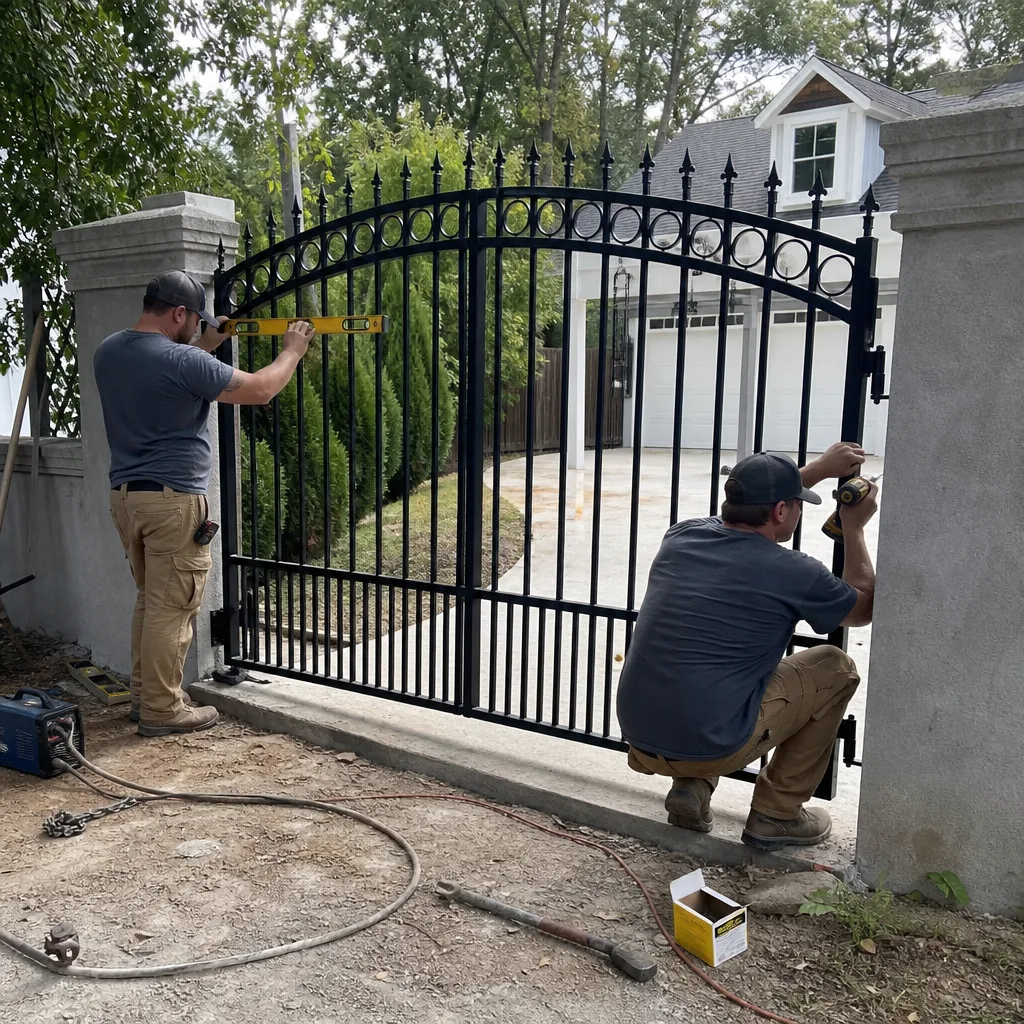
Gate warning signs are most useful when ranked by the risk they represent, not by how alarming they feel. The dramatic grinding sound gets attention, but the quiet intermittent remote response is often the more valuable early signal. Sort your observations into safety, mechanical, and monitor tiers. Document with video, measurement, and operating conditions. And address Tier 2 signs before they become Tier 1 emergencies.
In Alpharetta’s specific climate, humidity, soil movement, and pollen accumulation accelerate wear patterns that develop more slowly elsewhere. Annual preventive inspection, proper lubrication, and surge protection are cost-effective defenses against the conditions that shorten gate life in this market. For seasonal maintenance tips, see our guide on Seasonal Gate Repair Care for Alpharetta: Year-Round Homeowner’s Guide.
The Haven Standard governs every interaction: written price before work starts, documented photo record on every visit, and the 365-Day Done Right Promise covering all completed work. No voicemail loops, no surprise invoices, no guessing what the last technician found.
Written by Adrian Vance, Owner at Vance Gate Repair Alpharetta, serving Alpharetta since 2014.