
Last updated September 22, 2026
Free on-site gate assessment - hinges, posts, and your LiftMaster or Nice gate operator checked before anything is quoted
The assessment is free and the quote is the invoice.
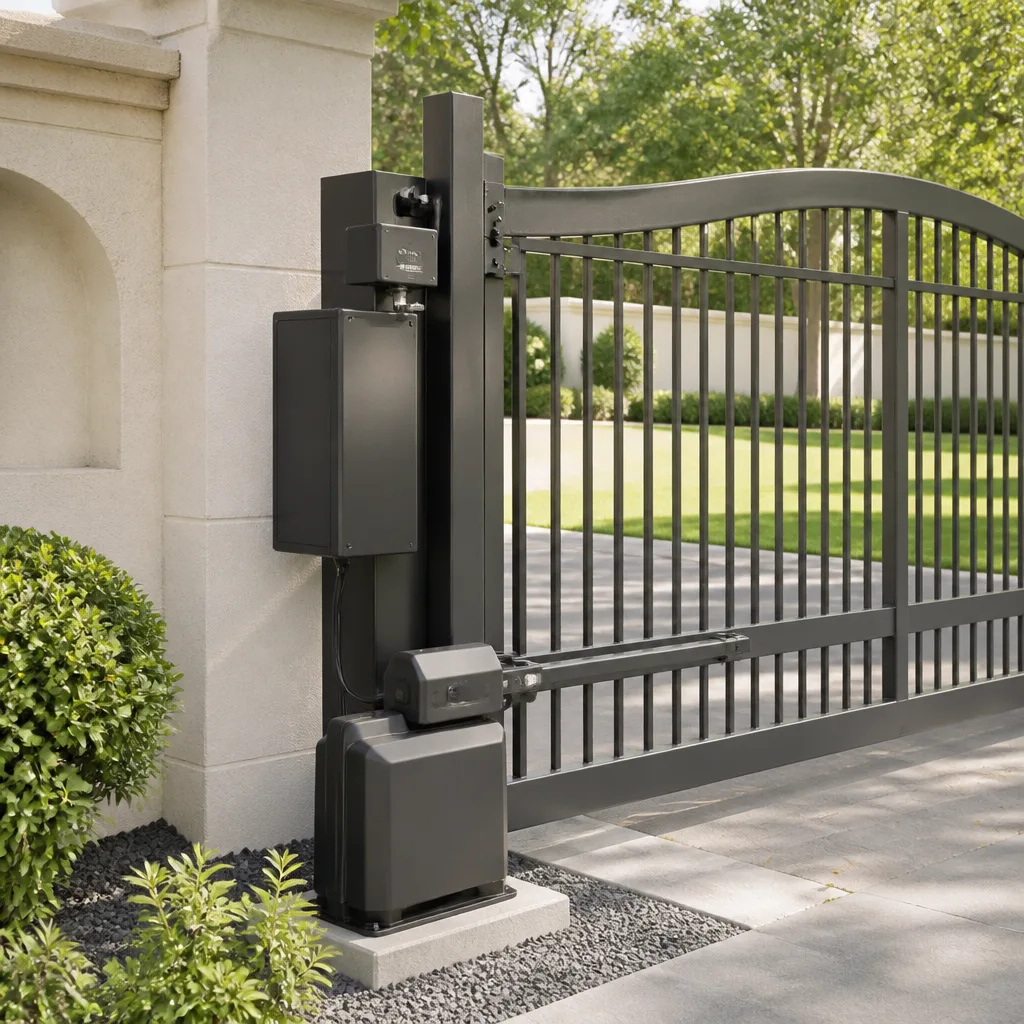
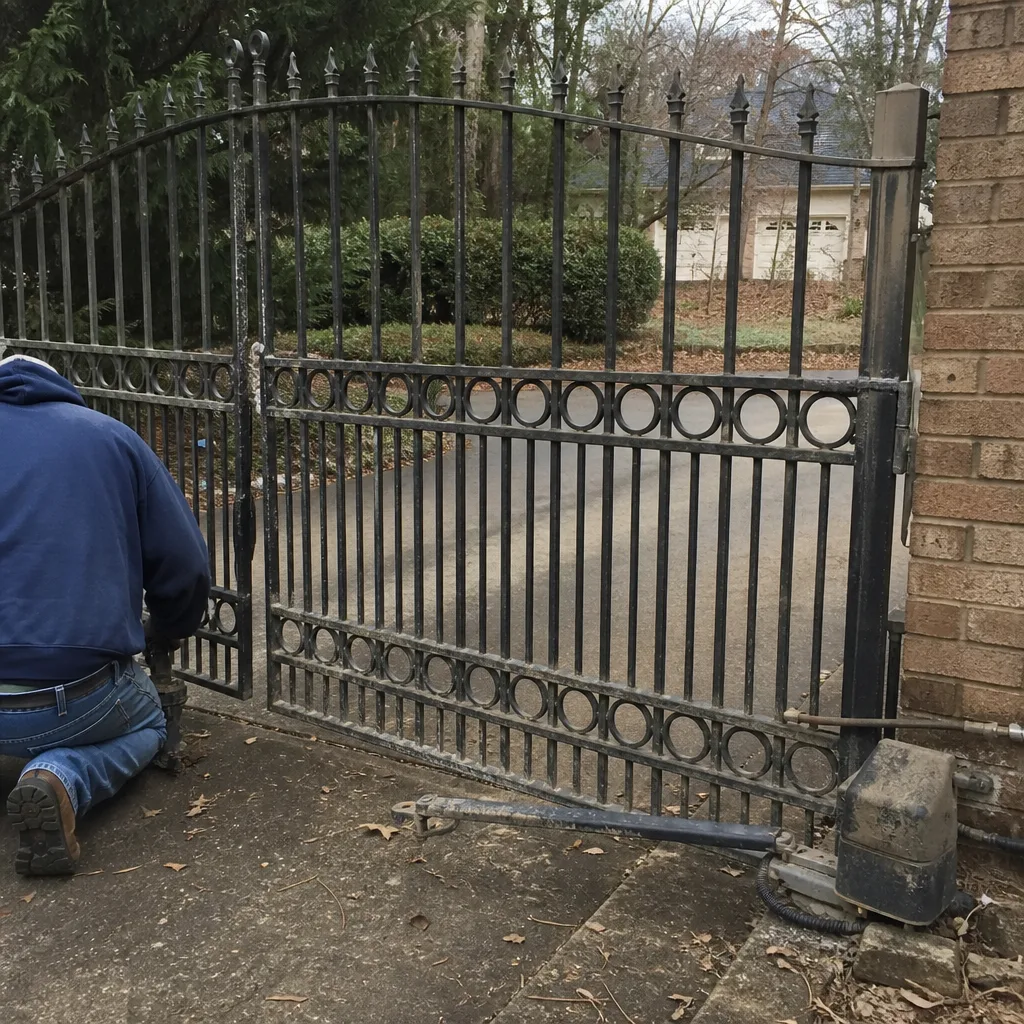 Before
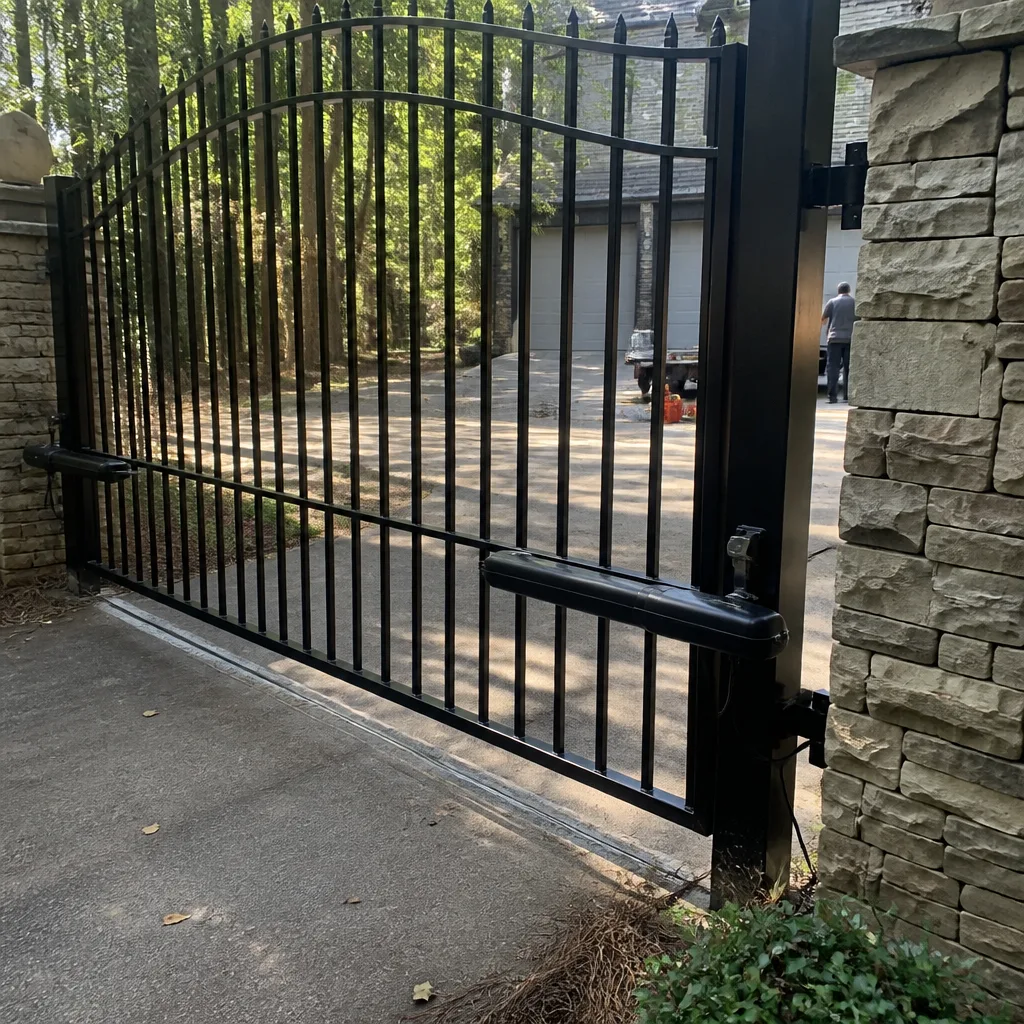 After
After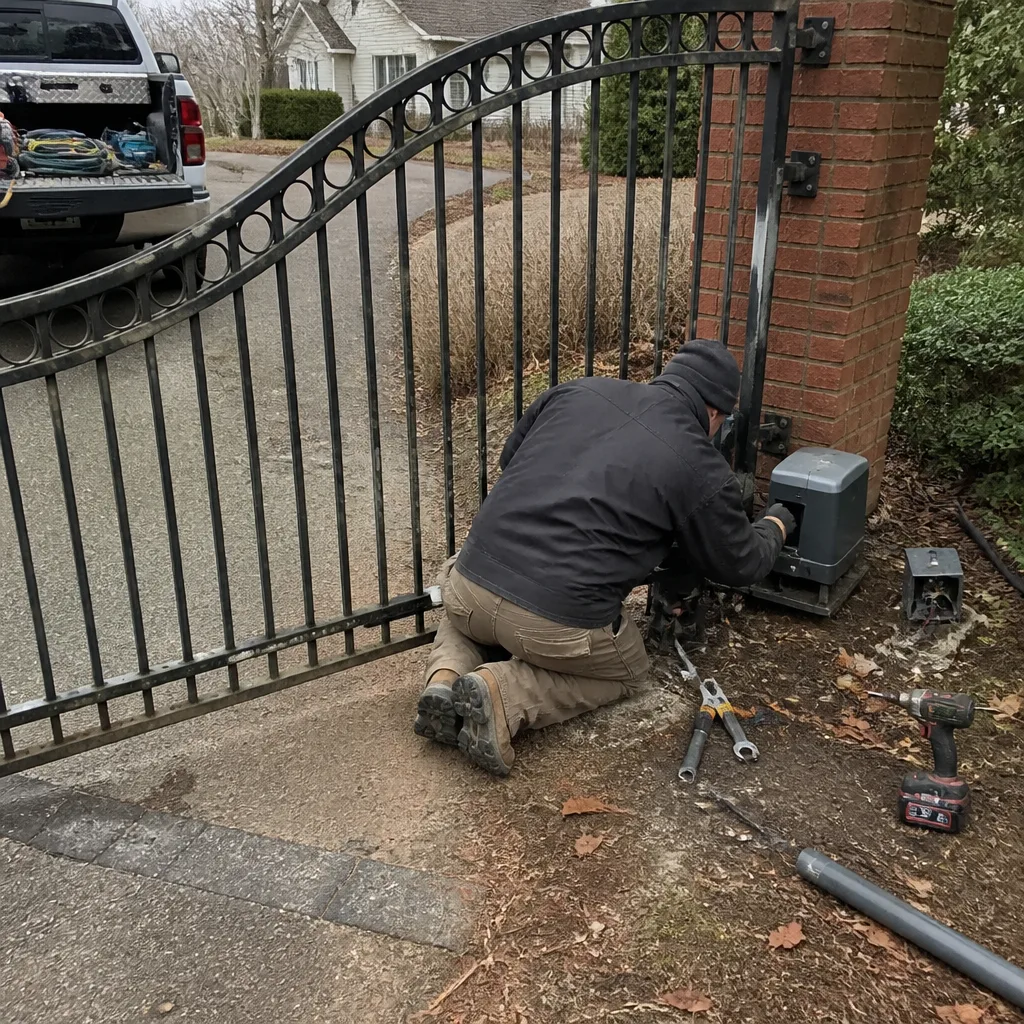 Before
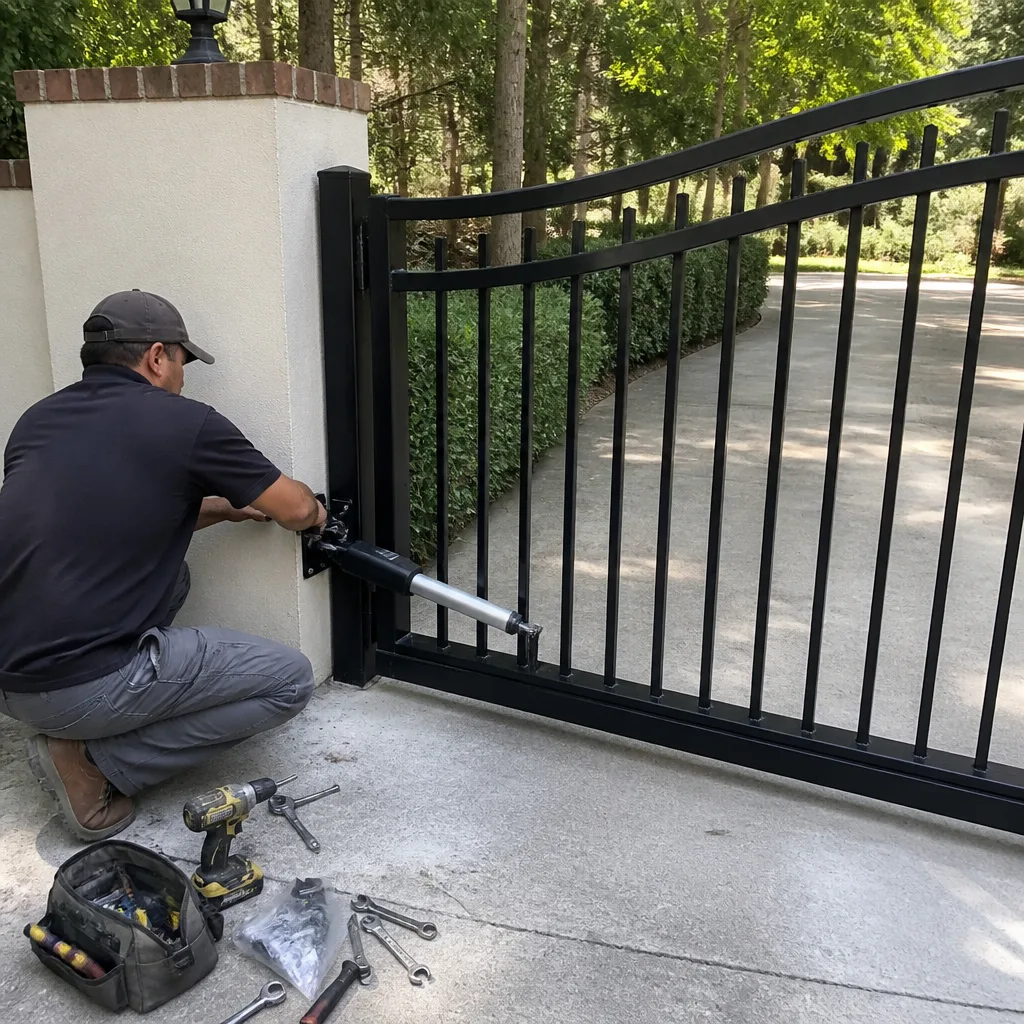 After
After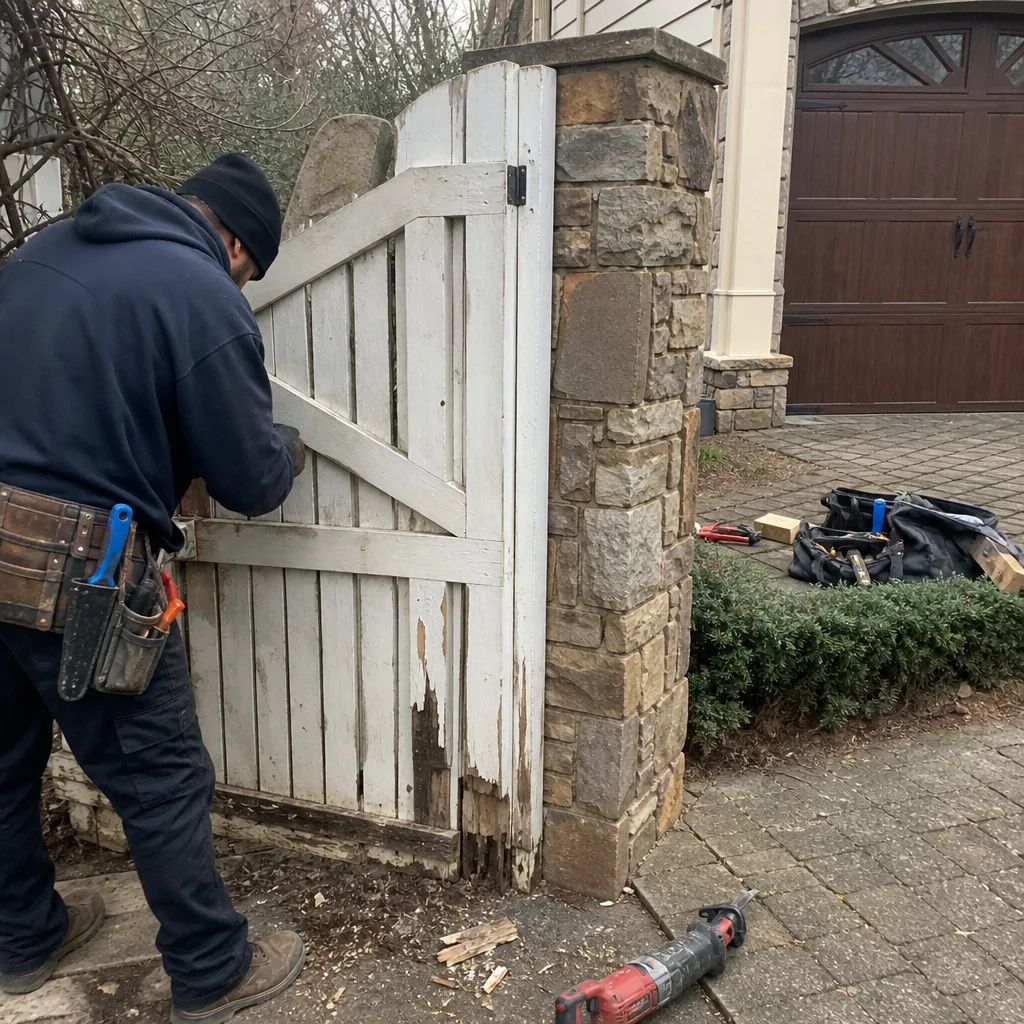 Before
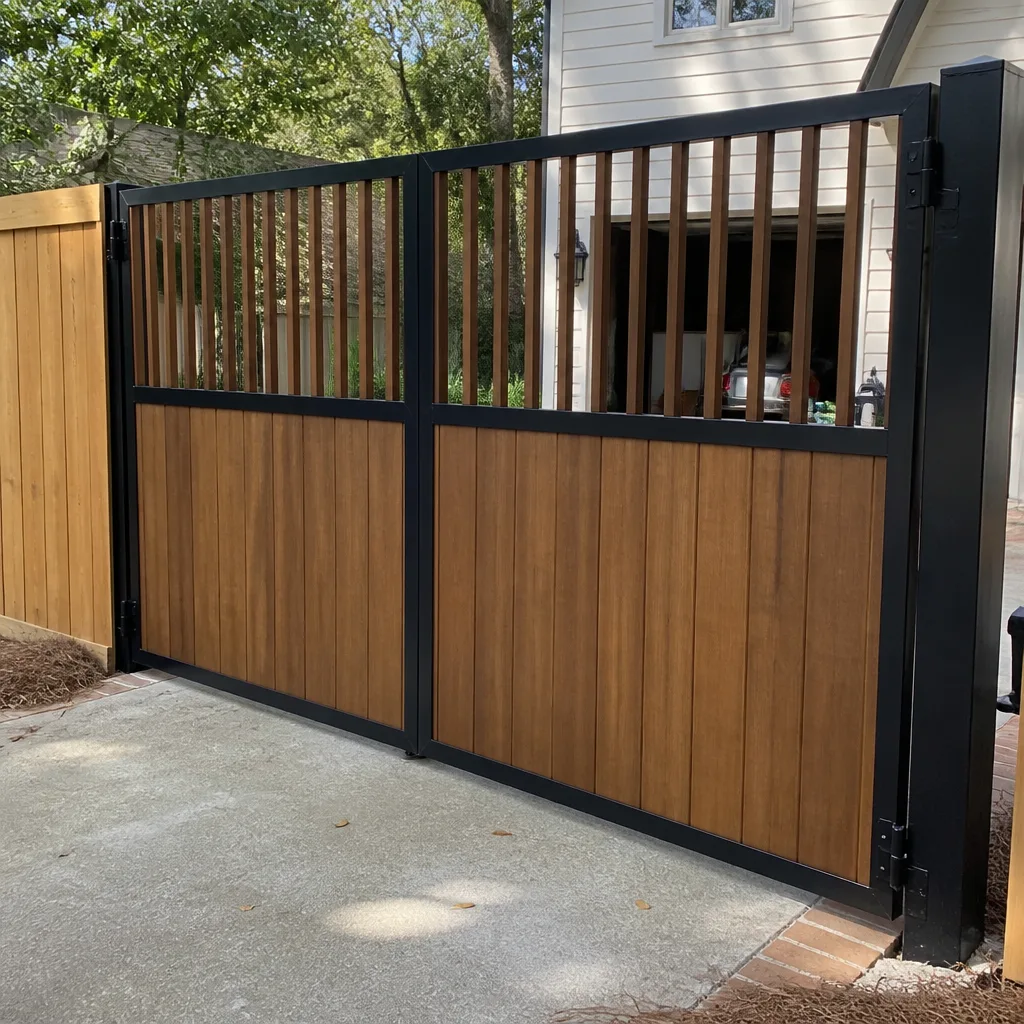 After
AfterGate Repair Maintenance Checklist for Alpharetta Homeowners
Every gate maintenance guide tells you to lubricate the hinges. Almost none tell you that using the wrong lubricant on a gate track in Georgia’s summer heat is a faster path to failure than skipping lubrication entirely. We’ve seen it in Alpharetta: a homeowner sprays white lithium on a sliding gate track in May, and by August the grease has baked into a paste that traps grit like sandpaper. This checklist, along with our Gate Repair Warning Signs: A Alpharetta Homeowner’s Reference Guide, gives you measurable pass-fail thresholds, not vague “check for wear” instructions. You’ll learn which lubricant characteristic matters for each component, what amp draw signals a motor working too hard, and how to build a maintenance log that any future technician can read without starting from scratch.
Quick Answer
Alpharetta homeowners should inspect their gates quarterly, with focused checks in late March (post-pollen season) and late October (pre-frost ground shift), or schedule professional Gate Repair services for complex issues. Key tasks include cleaning photo eyes of pollen residue, measuring hinge gap clearance at 1/8 inch or less, verifying operator amp draw within 15% of manufacturer spec, and lubricating chains with dry film lubricant (not grease) and hinges with synthetic NLGI Grade 2. Document every reading in a dated log; this record transfers to any technician and protects warranty coverage on operators from brands like Linear, Viking, and Ghost Controls.
Table of Contents
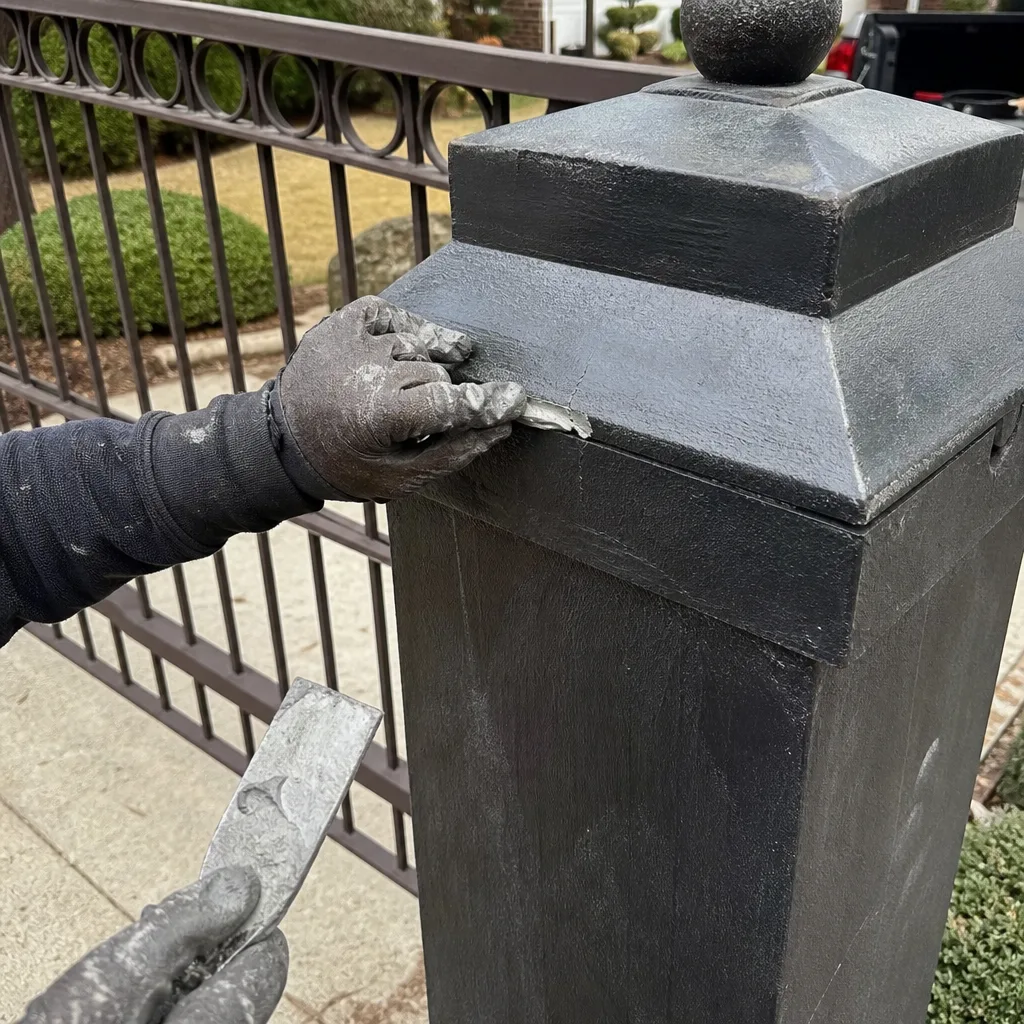
- Why Generic Checklists Fail in Alpharetta’s Climate
- The Quarterly Inspection Routine: A Measurable Pass-Fail System
- Lubricant Specifications by Component: What Characteristic Matters
- Operator Diagnostics: Amp Draw, Limit Switches, and Error Codes
- Alpharetta Environmental Stressors: Pollen, Clay Soil, and Freeze Cycles
- The Maintenance Log Format: Building a Transferable Record
- Warranty Protection: What DIY Maintenance Can Void and How to Document It
- Annual Deep Service: What a Technician Should Find
 Before
 After
AfterWhy Generic Checklists Fail in Alpharetta’s Climate
Generic maintenance checklists assume moderate humidity, stable soil, and seasonal patterns that don’t match north Georgia. Alpharetta sits at the intersection of Piedmont clay and rapid suburban development, which means two things for your gate: summer humidity that penetrates control boxes, and clay soil that swells in wet seasons and shrinks in drought, stressing posts and alignment. See our Gate Repair Permits, Codes & Inspections in GA: What You Need to Know for regulatory requirements.
We’ve documented this since 2014. In the Gate Repair in Alpharetta work we’ve done, the pattern repeats: a gate that worked fine in October starts dragging by March. The cause isn’t wear; it’s post heave from clay soil absorbing winter rains, then drying unevenly as spring temperatures rise. A generic checklist tells you to “check gate alignment.” It doesn’t tell you that in Alpharetta, alignment drift exceeding 1/4 inch between October and March almost always indicates soil movement, not hinge wear, and that shimming the hinge without addressing drainage around the post will fail again within six months.
The same specificity applies to pollen. Alpharetta’s tree canopy, heavy with pine and oak, deposits a yellow film from late February through April. That film coats photo-eye lenses, reducing infrared beam strength. A generic checklist says “clean photo eyes.” It doesn’t specify that pollen residue requires a different cleaning approach than dust, because pollen contains oils that smear when wiped dry. The correct method: compressed air first, then lens cleaner on a microfiber cloth, never a dry wipe that grinds pollen into the lens surface.
This checklist builds in these local factors. Every inspection point includes a measurable threshold and notes the Alpharetta-specific condition that makes that threshold meaningful.
The Quarterly Inspection Routine: A Measurable Pass-Fail System
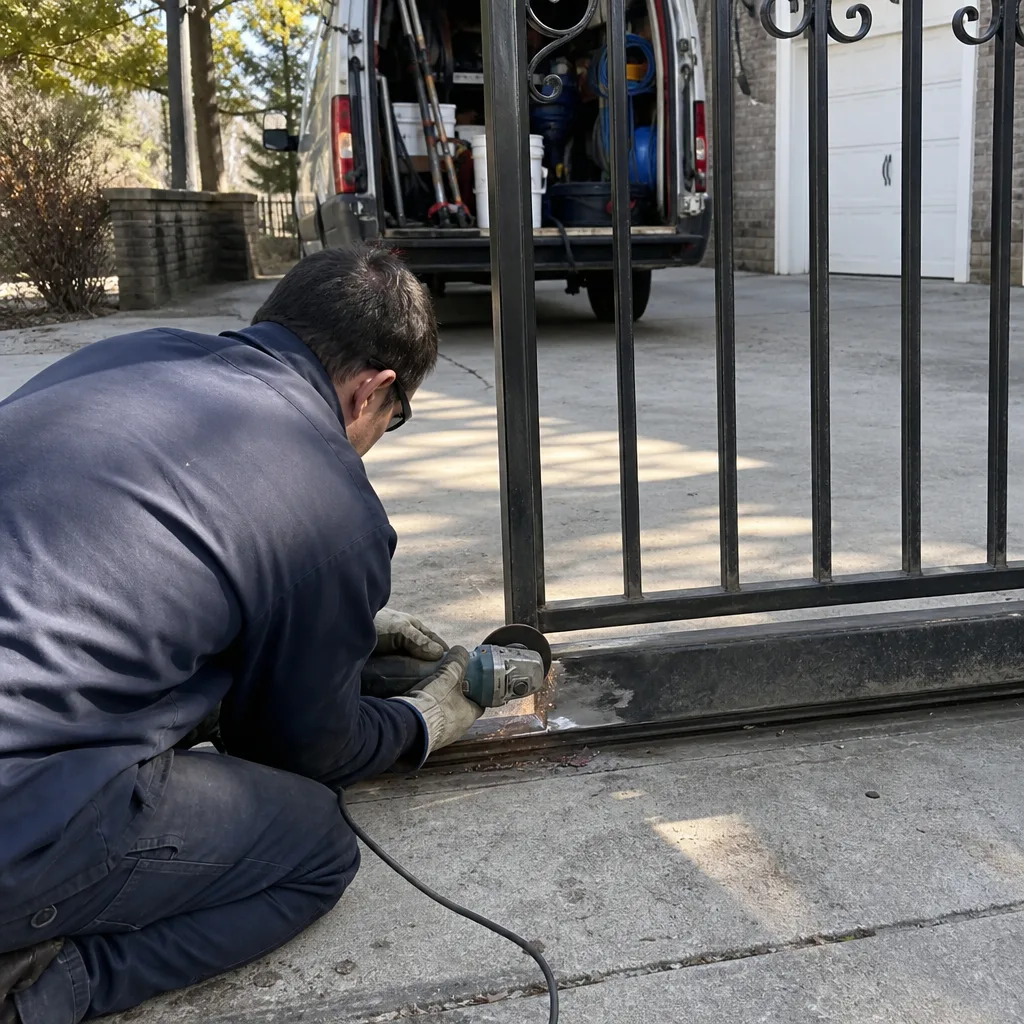
We recommend four inspection cycles per year, with two critical periods: late March, after pollen season peaks, and late October, before ground freeze-thaw cycles begin. Each inspection covers six zones. Record every measurement in your log (format below).
Zone 1: Gate Panel and Frame
- Hinge gap measurement: With the gate closed, measure the gap between hinge leaves using a feeler gauge or thin ruler. Pass: 1/8 inch or less. Fail: over 1/8 inch, or visible vertical play when you lift the gate by hand. In Alpharetta, hinge gap growth exceeding 1/16 inch in any single quarter usually indicates post movement from clay soil heave, not hinge wear.
- Weld inspection: Check all visible welds for rust bloom or cracking. Pass: smooth paint or coating, no rust. Fail: any rust that flakes when scraped with a fingernail, or any crack visible to the naked eye. Document with photo.
- Clearance check: Open and close the gate slowly. Pass: no contact with ground, post, or adjacent structure at any point in travel. Fail: any scraping or binding. Note: in Alpharetta’s red clay areas, especially near Windward Parkway and the newer subdivisions off Rucker Road, ground settling in the first 3-5 years after construction commonly reduces bottom clearance by 1/2 inch or more.
Zone 2: Track and Rollers (Sliding Gates)
- Track level: Place a 4-foot level on the track surface. Pass: bubble within level lines. Fail: any visible tilt. In Alpharetta, track tilt exceeding 1/4 inch over 4 feet usually indicates post footing settlement, not track wear.
- Roller condition: Rollers should spin freely by hand, with no flat spots or wobble. Pass: smooth rotation, firm bearing feel. Fail: grinding, flat spots, or visible grease contamination from previous wrong lubricant.
- Track cleanliness: Pass: clean metal, no packed debris. Fail: any buildup that requires scraping to remove. Georgia’s summer storms wash red clay onto low tracks; this hardens and abrades rollers.
Zone 3: Swing Arm and Hardware (Swing Gates)
- Arm bracket bolts: Torque to manufacturer spec (typically 45-60 ft-lbs for residential operators). Pass: no movement when tested with wrench. Fail: any bolt that turns before reaching spec.
- Stop post integrity: The physical stop that prevents over-travel. Pass: solid, no wobble, visible concrete footing. Fail: any movement when pushed. Alpharetta’s freeze-thaw cycles heave stop posts with shallow footings.
Zone 4: Safety Systems
- Photo-eye alignment: Most operators show a steady LED when aligned. Pass: steady light, gate reverses when beam is broken during close cycle. Fail: blinking LED, or gate fails to reverse. Test monthly, not quarterly, in Alpharetta pollen season (March-April).
- Edge sensor test: If installed, press the sensor face firmly. Pass: gate stops or reverses. Fail: no response. Document brand and model; edge sensors from different manufacturers use different pressure thresholds.
- Manual release: Operate the manual release mechanism per manufacturer instructions. Pass: smooth disengagement, gate moves freely by hand. Fail: sticky release, or gate still bound to operator when released.
Zone 5: Control Box and Wiring
- Box seal integrity: Pass: gasket intact, no moisture inside, no insect nests. Fail: condensation, ant trails, or spider webs on components. Alpharetta’s humidity makes this critical; we’ve found moisture in boxes that appeared sealed.
- Terminal tightness: With power off, tug each wire at terminals. Pass: no movement. Fail: any wire that pulls free or loosens. Document any green corrosion, which indicates prior moisture intrusion.
Zone 6: Operator Motor and Mechanics
- Amp draw test: Using a clamp meter on the power line, measure draw during open and close cycles. Pass: within 15% of manufacturer spec (found in manual or on nameplate). Fail: exceeds 15% over spec, or differs significantly between open and close directions. High draw in one direction usually indicates mechanical binding, not motor failure.
- Limit switch position: Note the physical stop position or digital readout. Pass: matches previous log entry within 1/2 inch. Fail: drift exceeding 1/2 inch since last inspection. Drift indicates limit switch wear or mechanical slip.
Lubricant Specifications by Component: What Characteristic Matters
The product characteristic matters more than the brand. Here’s what to use and why, based on what we’ve found works in Alpharetta’s heat and humidity. For additional maintenance topics, explore our more guides & resources.
| Component | Lubricant Type | Key Characteristic | Why It Matters Locally |
|---|---|---|---|
| Chain drive | Dry film lubricant (PTFE or molybdenum disulfide base) | No petroleum carrier that attracts grit | Georgia dust and pollen stick to wet lubricants, forming abrasive paste |
| Hinge pins and bushings | Synthetic NLGI Grade 2 grease | Drop point above 350°F | Summer gate surface temperatures exceed 140°F; low-drop-point grease runs out |
| Track (sliding gates) | None, or dry silicone spray | Zero residue | Any lubricant on track traps grit; rollers should run on clean steel |
| Roller bearings | Light machine oil, one drop | Low viscosity, penetrates seals | Excess oil flings onto track; one drop annually is sufficient |
| Slide gate rack (nylon or steel) | Dry film or nothing | No tack | Tacky lubricant accumulates clay grit, accelerating wear |
The most common mistake we see: homeowners spray white lithium grease on everything because one can covers the whole gate. In Alpharetta’s July and August heat, white lithium on a chain or track becomes a grit magnet. By September, the chain is wearing 3-4 times faster than an unlubricated chain would.
For hinge pins, the critical characteristic is drop point. Standard lithium greases drop around 350°F; in direct Georgia sun, a dark gate hinge can reach 180-200°F ambient, and friction adds more. We specify synthetic NLGI Grade 2 with a drop point above 400°F for Alpharetta installations. The brand matters less than the spec on the tube.
One exception: if your operator is a Linear or Viking model with a sealed gearcase, do not open the gearcase to add lubricant. These units are factory-filled with synthetic lubricant rated for 10+ years. Breaking the seal to “top off” lubricant voids the warranty and risks contamination. Document the sealed status in your log and leave it alone.
Operator Diagnostics: Amp Draw, Limit Switches, and Error Codes
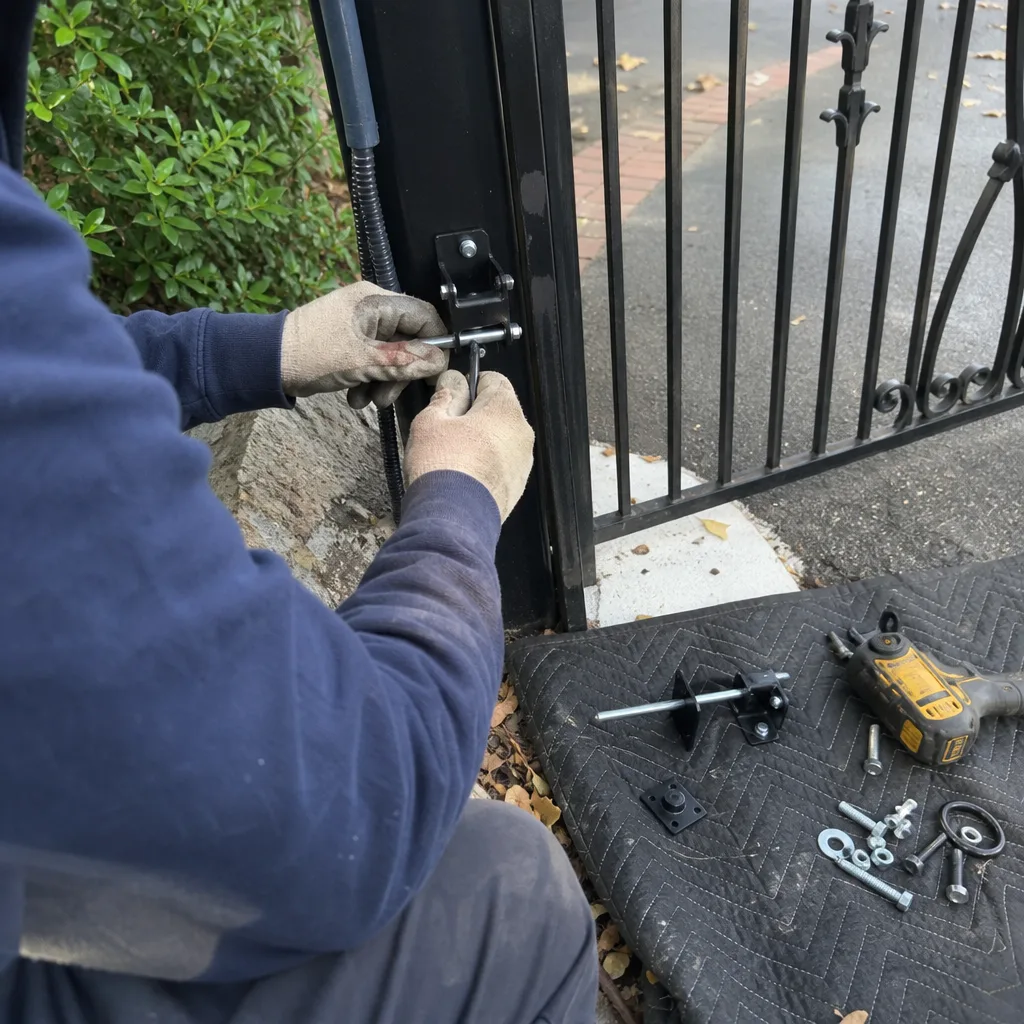
Operator diagnostics separate predictive maintenance from guesswork. These three measurements tell you whether the motor is healthy, the mechanics are binding, or the control logic is drifting.
Amp Draw: The Single Most Useful Number
A clamp meter on the power line during operation gives you objective data. Here’s how to interpret it:
- Baseline: Record amp draw during a new or freshly serviced gate’s open and close cycles. This is your reference.
- Within 10% of baseline: Normal wear. No action needed.
- 10-25% over baseline: Developing problem. Check for binding, debris, or hinge gap growth. Schedule service before next quarter.
- Over 25% above baseline: Active failure mode. Motor overheating, mechanical seizure, or electrical fault likely. Stop using the gate and call for service.
- Significant difference between open and close: Directional binding. Common causes: post heave affecting one side of travel, debris accumulation on one side, or failing gear in one direction.
In Alpharetta, we’ve tracked a pattern with Ghost Controls and DoorKing residential operators: amp draw rises 8-12% during pollen season due to increased resistance from fine particles in the gear train, then drops after cleaning. This is normal and predictable. A rise that persists after cleaning indicates real wear.
Limit Switch Drift
Limit switches tell the operator where to stop. Mechanical switches use physical cams; electronic switches use encoder counts. Both drift.
Measure and log:
- Mechanical switches: Mark the cam position with paint or tape. Check quarterly against your mark. Drift over 1/2 inch since last log indicates cam loosening or mechanical wear in the switch body.
- Electronic limits: Record the digital readout or LED flash count. Compare quarterly. Drift here indicates encoder wear or control board capacitor aging, both common after 5-7 years in humid climates.
When limit switches drift, the gate may not fully close (security risk) or may over-travel and hit the stop hard (mechanical stress). In Alpharetta’s older neighborhoods like downtown and the streets near Wills Park, we’ve found that 15-20 year old operators with original limit switches show drift of 2-3 inches annually. Replacement is the only cure; adjustment just delays the failure.
Error Code Logging
Modern operators flash error codes for specific faults. Don’t just clear them, log them. A pattern of “obstruction detected” errors in March-April usually means pollen-coated photo eyes, not real obstructions. A pattern of “motor overtemp” in July-August may mean the operator is undersized for the gate weight, or that amp draw has risen unnoticed.
Create a simple code in your log: date, error code, weather conditions, what you found. This history prevents misdiagnosis when a technician arrives.
Alpharetta Environmental Stressors: Pollen, Clay Soil, and Freeze Cycles
Alpharetta’s environment creates specific, predictable maintenance events. Build your schedule around them.
Pollen Season: Late February Through April
Pine pollen peaks in late March. Oak and other tree pollens extend into April. The yellow film is more than cosmetic:
- Photo eyes: pollen oils smear and reduce infrared transmission. Clean with compressed air first, then lens cleaner. Dry wiping grinds pollen into the lens.
- Control boxes: pollen drawn into vents by cooling fans coats circuit boards. If your operator has intake vents, vacuum them externally; do not blow air inward, which drives pollen deeper.
- Keypads and access devices: pollen accumulates in button crevices. Clean with electronics contact cleaner, not water or general cleaners.
In the subdivisions off Morris Road and near the Big Creek Greenway, where tree canopy is denser, we’ve seen photo-eye failure rates 40% higher during pollen season than in open developments like Avalon. Adjust your cleaning frequency to your lot’s tree cover.
Clay Soil and Post Heave
Alpharetta’s dominant soil type is Piedmont clay, specifically the Cecil soil series: high shrink-swell capacity, poor drainage, and aggressive on concrete footings. This affects gates in two ways:
- Post heave: Wet clay swells, pushing posts upward. Dry clay shrinks, creating voids around footings. The result is vertical post movement of 1/4 to 1/2 inch seasonally in unimproved soil. Gates on posts with proper drainage and 36-inch minimum footings show movement under 1/8 inch.
- Drainage critical: Downspouts that discharge near gate posts, or grading that pools water, accelerate heave. Check drainage quarterly, not annually.
We’ve documented post heave in Alpharetta’s newer construction particularly: soil around foundation backfill is looser and more water-absorbent than native clay. Gates installed within 3 years of home construction, especially in developments like The Manor or Crooked Creek, show higher post movement rates than gates on mature lots with compacted soil.
Freeze-Thaw and Winter Moisture
Alpharetta averages 15-20 freeze-thaw cycles annually. While mild compared to northern climates, these cycles matter for:
- Water in control boxes: freeze expansion cracks circuit boards. Ensure gaskets are intact before December.
- Concrete footings: saturated concrete spalls when frozen. Check for surface flaking on exposed footings.
- Grease in hinges: standard lithium grease thickens below 20°F. If you operate the gate during rare single-digit nights, expect higher amp draw until the grease warms.
The Maintenance Log Format: Building a Transferable Record
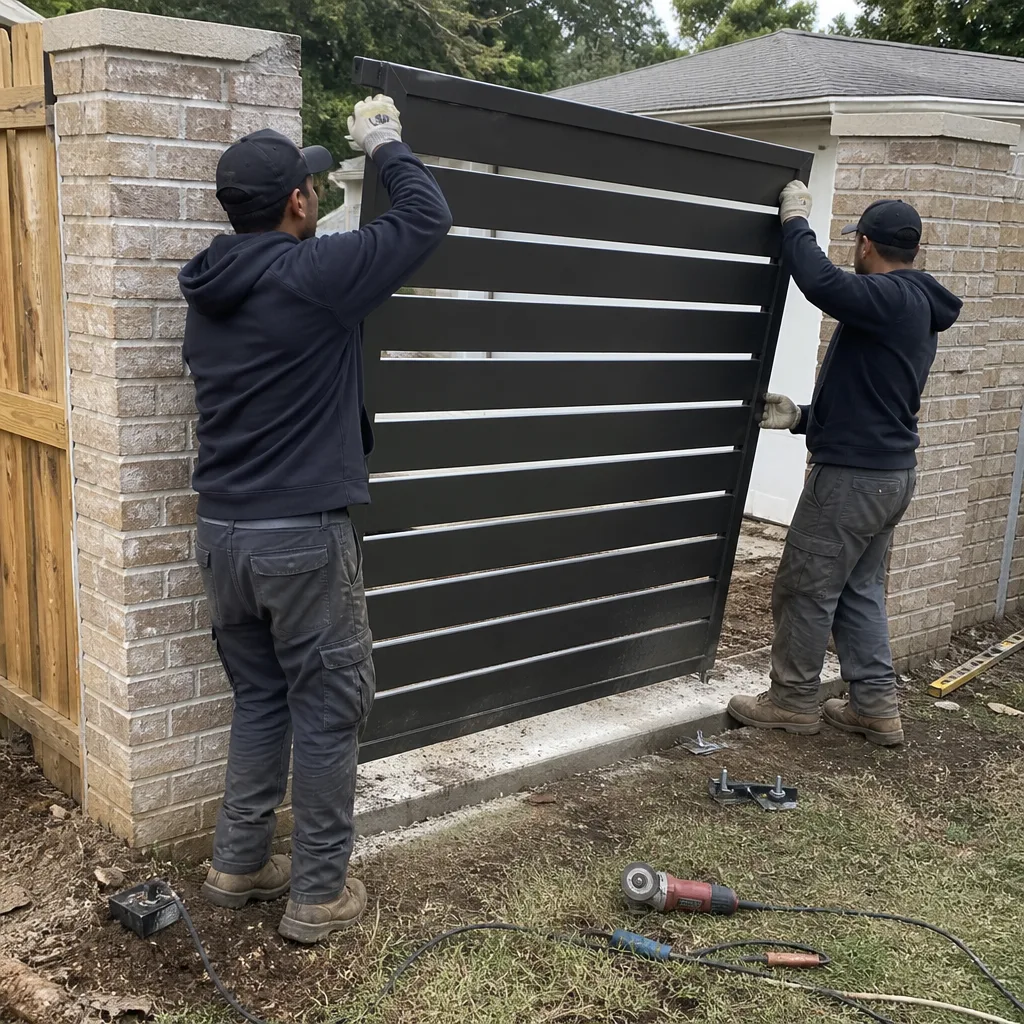
A maintenance log is only useful if another person can read it and know what you found. We use this format on every Gate Motor & Opener in Alpharetta service call, and we teach it to homeowners who want to maintain their own gates between professional visits.
Here’s the template:
Gate Maintenance Log
Address: _________________
Gate type: Swing / Slide
Operator brand/model: _________________
Date of installation or last major service: _________________
| Date | Inspector | Zone | Measurement | Pass/Fail | Action Taken | Photo Ref |
|---|---|---|---|---|---|---|
| Example: 3/28/2025 | Homeowner | Zone 4 | Photo eye LED: steady green; beam break test: reversed | Pass | Cleaned lens with compressed air + lens cleaner | IMG_0428a |
| Example: 3/28/2025 | Homeowner | Zone 6 | Amp draw open: 3.2A; close: 3.4A; spec: 3.0A | Pass (within 15%) | None; noted for trend | IMG_0428b |
The key fields:
- Measurement: Not “checked photo eye” but “Photo eye LED: steady green; beam break test: reversed.” Specific, reproducible, comparable to future readings.
- Photo Ref: Phone photos, stored in a dedicated album. Date-stamped automatically. Before-and-after for any adjustment.
- Trend column: Add a note when a measurement changes from previous. “Amp draw up 0.3A since 12/2024” tells a technician more than two isolated good readings.
Under The Haven Standard, we leave a documented photo record on every professional visit. Your homeowner log extends that record between visits. When you call for service, email or text the log pages. A technician who knows your gate’s history doesn’t waste your first hour rediscovering baseline conditions.
Warranty Protection: What DIY Maintenance Can Void and How to Document It
Operator warranties from major brands include maintenance clauses. Violate them, and a legitimate claim gets denied. Here’s what to know for common brands in Alpharetta.
Linear
Linear residential operators require annual maintenance by a “qualified technician” for warranty coverage beyond the first year. The warranty document defines this as someone who can “demonstrate knowledge of gate operator safety systems and mechanical adjustment.” Homeowner maintenance of photo eyes and external cleaning is explicitly permitted. Homeowner opening of the gearcase or adjustment of internal limit switches voids coverage.
Document your permitted maintenance with dated photos. If a Linear operator fails and the warranty is questioned, your log shows you didn’t perform excluded work.
Viking
Viking warranties are more permissive: homeowner maintenance is allowed if “performed in accordance with the owner’s manual.” The critical exclusion: use of non-Viking parts. If you replace a control board, limit switch, or remote receiver with a generic or third-party component, warranty coverage terminates. Document part numbers for any replacement you do yourself.
Ghost Controls
Ghost Controls specifically excludes damage from “improper lubrication or use of non-recommended lubricants.” Their manual specifies no lubricant on the chain (self-lubricating design) and light machine oil on hinge points only. We’ve seen warranty claims denied for chain lubrication with white lithium grease, which the manufacturer considers contamination.
DoorKing
DoorKing commercial-grade units (common in Alpharetta’s larger residential properties and HOA entrances) require documented annual maintenance for warranty continuation. The documentation must include: date, technician name or homeowner signature, specific tasks performed, and any measurements taken. Our log format above satisfies this requirement.
General Protection Strategy
For any brand, three practices protect your coverage:
- Keep the original manual and warranty document. Read the maintenance section specifically.
- Perform only the maintenance the manual explicitly permits to homeowners.
- Document everything with dated entries and photos. A denied warranty claim can be appealed with evidence; without documentation, you have no basis.
If you’re uncertain whether a task is permitted, call us for a free second opinion on the warranty language. We’ve read most major brand documents and can tell you what’s safe to DIY and what requires a technician’s documentation.
Annual Deep Service: What a Technician Should Find
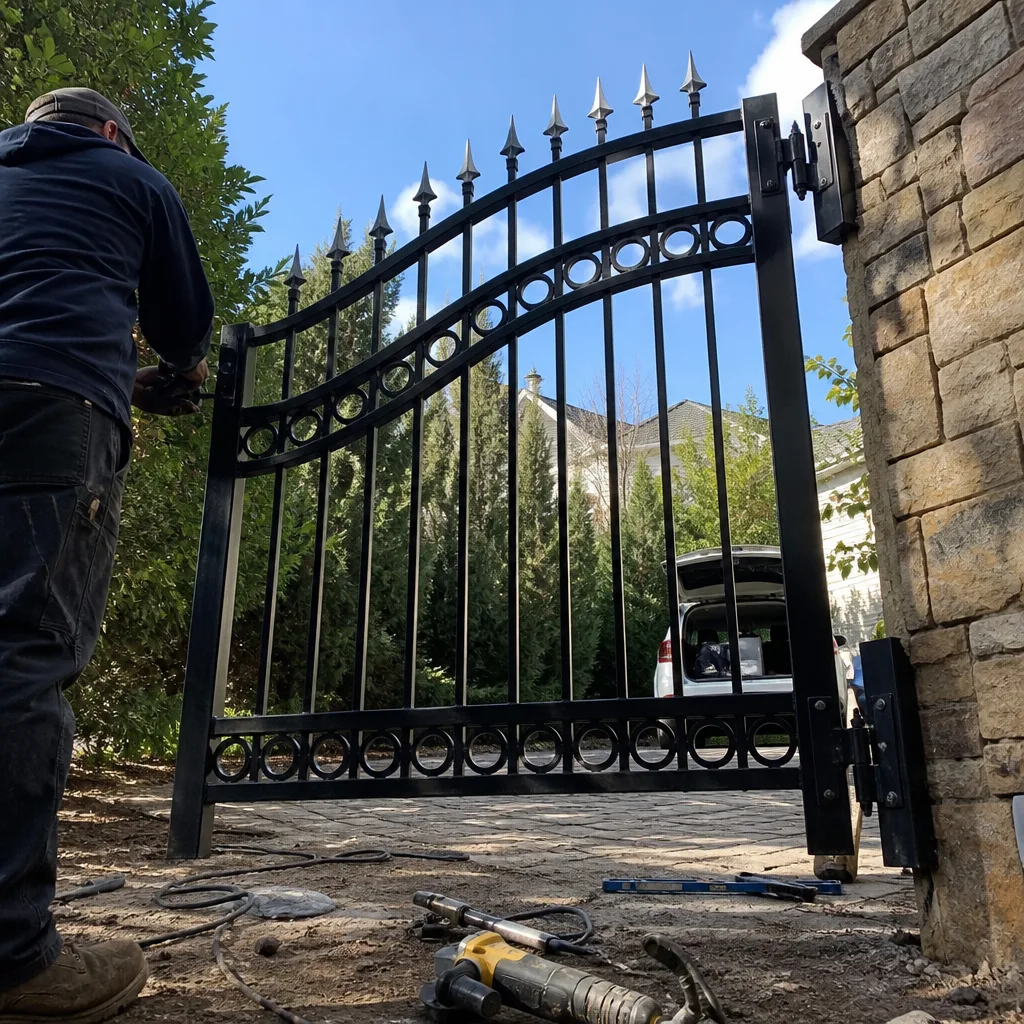
Quarterly homeowner inspections catch developing problems. Annual professional service addresses what homeowners can’t reach or measure. Here’s what a thorough annual service includes, and what you should expect in the documentation.
Mechanical Deep Check
- Gearcase oil analysis: On non-sealed units, sample or inspect gear oil for metal particles, water contamination, or degradation. This requires opening the case, a warranty-voiding act for homeowners on some brands.
- Bearing inspection: Remove and inspect roller bearings, hinge bushings, and idler pulleys. Measure internal clearance. Replace before failure, not after.
- Post footing assessment: Excavate slightly around footing top to check for voids, water pooling, or concrete spall. In Alpharetta clay soil, this is predictive maintenance, not paranoia.
Electrical Deep Check
- Ground fault and insulation resistance: Test with a megohmmeter. Declining insulation resistance predicts cable failure months before it occurs.
- Control board capacitor testing: ESR (equivalent series resistance) measurement. Rising ESR causes erratic operation before total failure.
- Photo-eye beam strength: Measure with a light meter, not just visual LED check. Beam strength degrades before alignment fails.
Documentation Delivered
Under The Haven Standard, annual service leaves you with:
- Written scope of work performed
- Written price (if repairs were needed)
- Photo log of all findings, adjustments, and installed parts
- Updated maintenance log with professional measurements added
- 365-Day Done Right Promise coverage on all work performed
For Gate Installation in Alpharetta customers, we include a baseline annual service in the first year. This establishes the measurement history that makes all future maintenance meaningful.
Common Mistakes to Avoid
- Using WD-40 as a lubricant. WD-40 is a water displacer and solvent, not a lubricant. It evaporates within days, leaving metal unprotected. We’ve seen homeowners spray it on chains weekly, wondering why wear accelerates. Use dry film on chains, synthetic grease on hinges.
- Ignoring amp draw until the motor fails. Amp draw is your early warning system. A motor that draws 25% over spec for six months fails catastrophically, often on a Friday evening. Measure quarterly, trend annually.
- Cleaning photo eyes with dry cloth during pollen season. The pollen oils smear across the lens, creating a film that infrared barely penetrates. Use compressed air first, then lens cleaner. In Alpharetta, this mistake peaks in late March.
- Lubricating a sliding gate track. The track should be clean, dry steel. Any lubricant traps grit and turns the track into sandpaper. Lubricate roller bearings, not the track surface.
- Adjusting limit switches without logging the old position. If the new position is wrong, you need the old position to return to. Always log before changing. We’ve been called to gates where three previous “adjustments” have moved the limit so far that the gate hits the stop or leaves a 6-inch gap.
- Assuming post stability without checking drainage. In Alpharetta’s clay soil, a gate post can appear solid while water pools against its footing underground. Check surface drainage quarterly; probe for soft soil after heavy rains.
- Performing warranty-voiding maintenance to save a service call. Opening a sealed gearcase or replacing a control board with a generic part saves $200 today and costs $800 when the warranty claim is denied. Know your warranty terms.
When to Call a Professional
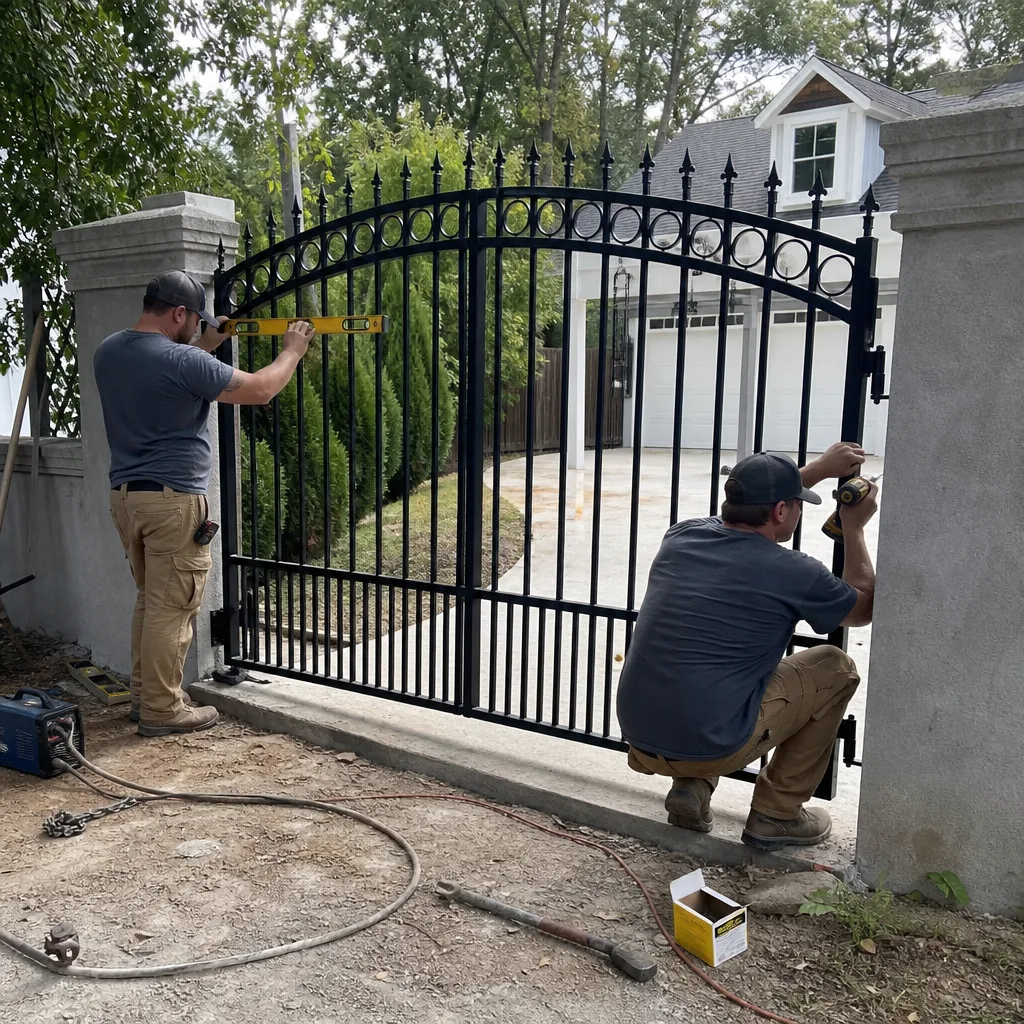
Some conditions require equipment and training that homeowners shouldn’t attempt. Call a technician when:
- Amp draw exceeds 25% over baseline or manufacturer spec
- Any weld shows cracking, not just surface rust
- The gate binds or scrapes and you cannot identify the cause with visual inspection
- Limit switch drift exceeds 2 inches since last professional service
- You smell electrical burning or see scorch marks in the control box
- Post movement exceeds 1/2 inch vertically or any visible tilt
- Error codes recur after you’ve performed permitted homeowner maintenance
Vance Gate Repair Alpharetta offers free estimates in Alpharetta. We’ll review your maintenance log, perform our own measurements, and give you a written price before any work starts. Call (678) 679-2152. If you have a written estimate from another company, bring it for a free second opinion under Haven Standard Clause 1.
Frequently Asked Questions
Quarterly, with critical inspections in late March after pollen season and late October before freeze-thaw cycles. Homes in heavily wooded areas, like those near Big Creek or along Kimball Bridge Road, should add monthly photo-eye checks during February through April.
Annual professional maintenance for a residential gate in Alpharetta typically runs $180-$340, depending on gate type, operator brand, and whether any adjustments or parts replacement are needed. We provide a written price before any work starts, and our documented photo record is included at no additional charge. Call (678) 679-2152 for an exact quote on your specific gate.
You can perform visual inspection, cleaning, lubrication of permitted points, and basic measurement logging. You should not open sealed gearcases, replace electrical components with non-OEM parts, or perform tasks your operator manual assigns to “qualified technicians.” Doing so voids most manufacturer warranties. When in doubt, call for a free second opinion on what’s safe to DIY.
In Alpharetta, three spring factors affect gates: pollen coating photo eyes and accumulating in control boxes, clay soil swelling from winter rains and shifting post alignment, and temperature swings causing metal expansion differentials between gate and frame. Our quarterly schedule targets these specifically.
Rising amp draw is the earliest indicator. Measure with a clamp meter during operation. If draw rises steadily quarter to quarter, or exceeds 25% over manufacturer specification, the motor is working too hard. This precedes failure by weeks or months, giving you time to schedule replacement before a breakdown. Other signs: hot motor housing after normal operation, unusual noise (grinding or squealing), or error codes indicating motor overtemp.
Ask three questions: Will you put the price in writing before work starts? Will you leave a documented photo record of what you found and what you adjusted? What is your warranty policy if the repair doesn’t hold? At Vance Gate Repair Alpharetta, the answers are yes, yes, and 365-Day Done Right Promise with no expiration within that window. Be cautious of companies that quote verbally or cannot explain their documentation practice.
The Bottom Line
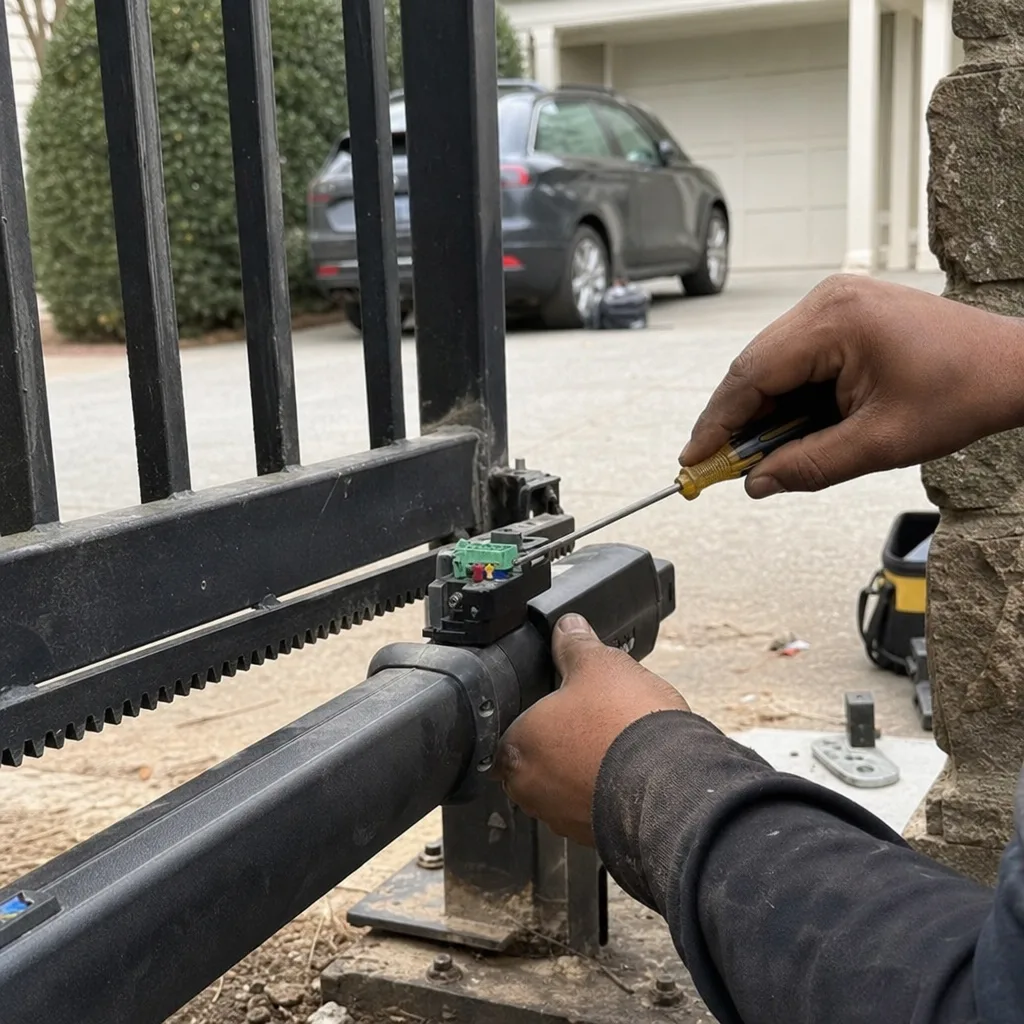
Effective gate maintenance in Alpharetta requires measuring, not just looking. Hinge gap, amp draw, limit switch position, and photo-eye beam strength give you objective data that predicts failure before it happens. Match your lubricant to the component’s actual need, not what’s convenient. Build a log that transfers to any technician. Respect warranty boundaries, document what you do, and schedule professional deep service annually. The homeowners who avoid emergency repairs are the ones who noticed the amp draw rising in March, not the ones who heard the motor grind to a halt in July.
Written by Adrian Vance, Owner at Vance Gate Repair Alpharetta, serving Alpharetta since 2014.